|
ORACLE LICENSING
|
Navigate the licensing requirements for Oracle Database, Enterprise Options, and Management Packs in non-production environments. Maintain compliance and optimize licensing costs by selecting the appropriate licensing model, including Embedded Software Licensing (ESL), Application Specific Full Use (ASFU), Oracle Technology Network (OTN), or Full Use (FU).
|
Date of publication: 01 May 2026.
Authors: Yvan LUXEMBOURG and Uttam PANDA.
|
|
◉ View PDF ⬇ Download Sources
This publication is provided by OMTCO, an advisory company registered in Munich, Germany. For further publications, visit https://omtco.eu/search.
Link to the publication: https://omtco.eu/publications/licensing-oracle-database-in-non-production-environments.
Download the publication PDF: https://omtco.eu/publications/licensing-oracle-database-in-non-production-environments.pdf.
Download the source materials: https://omtco.eu/publications/licensing-oracle-database-in-non-production-environments.zip.
Read our Statement of Independence, Statement of Confidentiality, and Disclaimer:
https://omtco.eu/StatementOfIndependence.pdf
https://omtco.eu/StatementOfConfidentiality.pdf
https://omtco.eu/disclaimer
For comments or questions, please reach out to an OMTCO representative at https://omtco.eu/contact or contact us at publication@omtco.eu.
Abstract
This publication is a practical guide to licensing Oracle Database, Enterprise Options, and Management Packs in on-premises non-production environments.
It examines how Oracle distinguishes production from non-production and analyzes four licensing models – Embedded Software Licensing (ESL), Application Specific Full Use (ASFU), Oracle Technology Network (OTN), and Full Use (FU) – including their eligibility conditions, restrictions, risk and cost profiles, and practical application.
The publication provides decision tools, including checklists and decision trees, together with step-by-step licensing calculations under the Processor and Named User Plus (NUP) metrics.
Three modeled scenarios – Production, Test, and Development – illustrate how licensing requirements and costs can vary depending on user populations, infrastructure architecture, virtualization, licensing metrics, and specific Oracle agreements, including Cluster with Double Isolation (CWDI) and Active Core (AC) agreements. IT managers and licensing specialists can adapt the accompanying Microsoft Excel files to their specific infrastructure, user populations, and pricing.
Background
Oracle Database is widely deployed for mission-critical systems, and so are the non-production environments that support them.
Non-production environments – including development, testing, staging, quality assurance, and training – are part of every enterprise IT landscape. They are often built to resemble production as closely as possible, so that changes can be validated before release.
Licensing non-production environments offers opportunities to simplify licensing and reduce costs, but it requires careful interpretation of Oracle’s contractual terms and policies. From an Oracle licensing perspective, the classification of an environment cannot be determined solely by its technical name or internal purpose. Oracle licensing terms distinguish production and non-production according to the actual activities performed, the users accessing the environment, the data processed, the degree of connectivity with production, and the applicable contractual terms.
This distinction is particularly important because different licensing models may apply to the same Oracle Database technology depending on how an environment is used. Appropriate use of Embedded Software Licensing (ESL), Application Specific Full Use (ASFU), Oracle Technology Network (OTN), or Full Use (FU) licensing can materially affect both licensing exposure and cost.
A structured assessment of the applicable licensing terms, deployment architecture, and actual usage is necessary to optimize non-production licensing while maintaining a defensible compliance position and to avoid unexpected licensing exposure and penalties.
Methodology
The methodology relies on Oracle’s own licensing documents as the primary source. The analysis of these documents is combined with licensing-model selection, compliance checklists, and detailed licensing calculations.
It begins by defining the software and environment scope of the publication and reviewing Oracle Database offerings and related Oracle Technology products whose licensing principles may be comparable [➜ Chapter 1].
Relevant Oracle licensing publications are analyzed to determine Oracle’s definitions of production and non-production, considering the type of publication, its date, and its software scope [➜ Chapter 2].
Four licensing models for on-premises Oracle Database deployments are analyzed – Embedded Software Licensing (ESL), Application Specific Full Use (ASFU), Oracle Technology Network (OTN), and Full Use (FU) – including their contractual permitted use and restrictions, compliance requirements, and practical application [➜ Chapter 3].
Practical decision checklists are provided to support the selection of the appropriate licensing model and, where Full Use licensing is required, the appropriate Processor or Named User Plus (NUP) metric. The respective risk and cost profiles of ESL, ASFU, OTN, and FU are also compared [➜ Chapter 4].
Finally, three representative scenarios – Production, Non-Production Test, and Non-Production Development – are modeled in Microsoft Excel using Oracle Database Enterprise Edition with selected Enterprise Options and Management Packs. The scenarios compare Processor, NUP, and, where applicable, OTN licensing and illustrate the impact of infrastructure architecture, virtualization, user populations, and specific Oracle agreements, including Cluster with Double Isolation (CWDI) and Active Core (AC) agreements [➜ Chapter 5].
The accompanying Microsoft Excel calculations are included in the downloadable source materials and can be adapted to customer-specific infrastructure, user populations, pricing assumptions, and contractual conditions [➜ Chapter 6].
Results
The analysis of Oracle licensing examines how Oracle defines production and non-production and how these definitions may differ from common-sense interpretations.
Oracle licensing classification depends on the actual use of an environment rather than solely on whether it is internally described as development, test, staging, or another non-production category. Oracle sources identify several non-production use cases, but eligibility for a particular licensing model must still be assessed against the applicable Oracle licensing and contractual terms.
The four licensing models have materially different risk and cost profiles. Embedded Software Licensing (ESL) generally combines low customer-side licensing risk with no additional licensing cost where Oracle Database remains embedded and inaccessible within an Independent Software Vendor (ISV) solution. Application Specific Full Use (ASFU) provides broader use rights than ESL but remains subject to application-specific contractual and technical restrictions. Oracle Technology Network (OTN) involves no license acquisition cost but requires strict compliance with permitted development-related purposes, user restrictions, application lifecycle conditions, data usage, connectivity, and other operational controls. Full Use (FU) provides the broadest usage rights but generally carries the highest commercial licensing cost and still requires correct determination of edition, Processor versus Named User Plus (NUP) metric, infrastructure scope, and license quantities.
The three modeled scenarios – Production, Test, and Development – show that licensing costs can vary substantially according to the number of users, infrastructure architecture, virtualization model, licensing metric, and contractual framework. Full Use Processor licensing can be more cost-effective in environments with very large user populations, while Full Use Named User Plus (NUP) licensing can provide significant savings where the user population is limited and identifiable, for instance in development environments. Oracle Technology Network (OTN), where applicable in a qualifying environment, can eliminate the need for additional commercial Oracle Database licenses, but OTN carries a higher compliance risk because eligibility depends on strict restrictions concerning permitted purposes, user access, application lifecycle, data connectivity, and other operational conditions. Determining and documenting whether an environment qualifies for OTN therefore requires particular care.
The scenarios also illustrate how customer-specific Oracle agreements, such as Cluster with Double Isolation (CWDI) and Active Core (AC) agreements, may modify the licensable perimeter in virtualized environments. Depending on the contractual terms, licensing may be determined at the vCenter, cluster, or virtual-machine level, using Physical Operating System Environment (POSE) or Virtual Operating System Environment (VOSE) licensing modes.
The downloadable Microsoft Excel files allow customers to modify the principal assumptions and reproduce the licensing calculations for their own environment. Customers can therefore compare alternative licensing approaches before architectural, or licensing decisions are made.
Conclusion
Oracle Database licensing in non-production environments requires a combined assessment of applicable Oracle licensing and contractual terms, actual usage, infrastructure architecture, user populations, deployment characteristics, and available licensing models. An environment should not be classified solely by its technical label; the activities performed within it and the applicable Oracle licensing conditions are decisive.
The four licensing models analyzed in this publication have different combinations of cost, flexibility, and compliance risk. Embedded Software Licensing (ESL) can provide a low-risk and low-cost licensing basis where Oracle Database is fully embedded within an Independent Software Vendor (ISV) solution. Application Specific Full Use (ASFU) can also avoid separate Full Use licensing where the deployment remains within the application-specific rights granted through the ISV arrangement. Oracle Technology Network (OTN) provides a no-license-fee option for eligible development-related use but is subject to restrictive conditions and therefore requires careful eligibility assessment, operational controls, and documentation. Full Use (FU) offers the broadest deployment rights but generally involves the highest licensing cost.
Where Full Use licensing is required, the choice between the Processor and Named User Plus (NUP) metrics can have a substantial financial impact. Processor licensing can be advantageous for environments with large or difficult-to-identify user populations, whereas NUP licensing may be more cost-effective where the user population is limited and identifiable.
Virtualized environments require particular attention because the licensable perimeter can differ significantly depending on the applicable Oracle agreement. Customer-specific arrangements such as Cluster with Double Isolation (CWDI) and Active Core (AC) agreements may materially reduce the infrastructure scope that must be licensed compared with standard Oracle licensing.
In practice, optimization requires close collaboration between licensing specialists and technical teams. Contractual analysis, accurate infrastructure data, user identification, scenario modeling, and auditable documentation allow organizations to optimize licensing costs while maintaining a defensible compliance position.
Contents
1 Software and Environment Scopes
This publication focuses on Oracle Database licensing in non-production environments, defined by two key criteria:
-
Software scope: Oracle Database
Extended scope: related Oracle Technology Products with similar licensing as Oracle Database, such as WebLogic Server, Essbase, and Oracle Data Integrator (ODI).
-
Environment scope: Non-production use cases
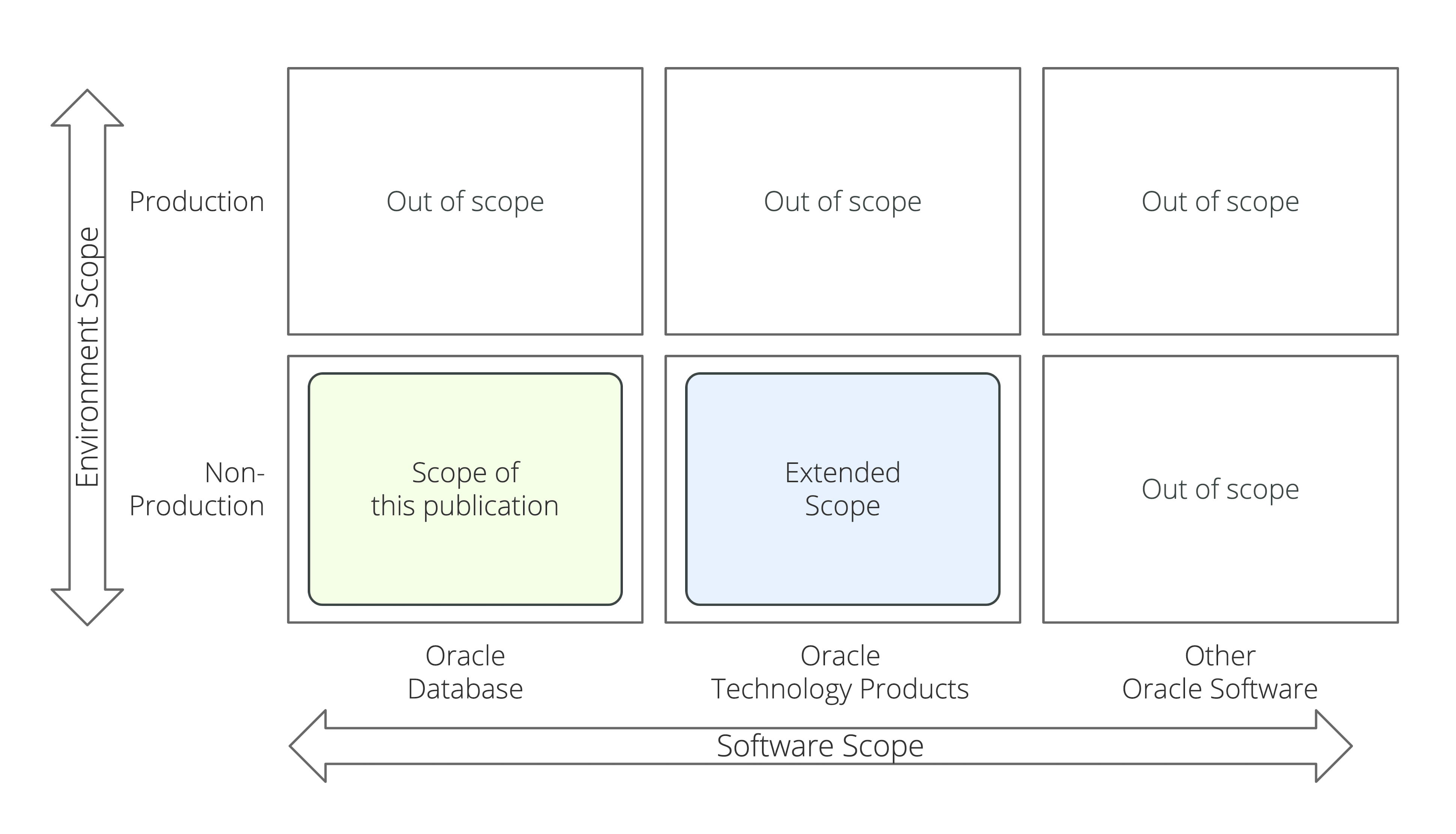
Exhibit 1: Software and Environment Scope of this Publication
Oracle Database is offered in several editions. Because the licensing rules differ by edition, the editions are summarized first.
1.1 Software Scope: Oracle Database Offerings
Oracle Database Current Offering (As of May 2026)
At the time of publication, Oracle’s database product family is branded as Oracle AI Database. For the purposes of this publication, the principal on-premises offerings are Enterprise Edition (EE), Standard Edition 2 (SE2), Personal Edition (PE), and Oracle AI Database Free (formerly XE).
Enterprise Edition (EE) is designed for demanding enterprise workloads requiring advanced performance, scalability, availability, and security capabilities. Enterprise Edition can also be extended through separately licensable Oracle Database Options and Management Packs.
Standard Edition 2 (SE2) is intended for workgroup, departmental, and web applications, providing core Oracle Database functionality. SE2 is subject to specific licensing, hardware, deployment, and technical limitations.
Personal Edition (PE) is intended for single-user development and deployment environments requiring compatibility with Standard Edition 2 and Enterprise Edition. Personal Edition is subject to specific licensing and platform restrictions.
Oracle’s free database offering has evolved from Oracle Database Express Edition (XE), introduced in 2005, to Oracle Database Free, introduced in 2023, and subsequently to Oracle AI Database Free. Oracle AI Database Free is the free edition of Oracle AI Database. It is a free, resource-limited Oracle Database offering – primarily for development, learning, prototyping, and smaller-scale deployments – with defined limits on processor capacity, memory, and user data storage.
Oracle AI Database Free is licensed under the Oracle Free Use Terms and Conditions (FUTC). FUTC is not analyzed further in this publication as it is not specific to non-production environments.
Retired – Oracle Database Lite was designed for mobile and embedded environments. The Oracle Lite Client Database is no longer supported, and Oracle Database Lite is outside the scope of the current Oracle Database offerings considered in this publication.
Note: Related Oracle database technologies, such as Oracle Database Mobile Server, Oracle NoSQL Database, Berkeley DB, etc., are out of scope for this analysis, as they are separate products with specific use cases and licensing rules that differ from those of Oracle Database.
Historical Offering (May 2026)
Enterprise Edition (EE) and Personal Edition (PE) have been available since early releases of Oracle Database. Oracle Database Express Edition (XE) was introduced in 2005 as a free, resource-limited edition and was later succeeded by Oracle Database Free, now offered as Oracle AI Database Free. Standard Edition 2 (SE2) replaced the discontinued Standard Edition (SE) and Standard Edition One (SE1) and remains Oracle’s principal Standard Edition offering.
Legend: ✓ Yes – ✕ No
|
Enterprise Edition (EE)
|
7.0 (1992)
|
Currently available
|
✓
|
|
Standard Edition (SE)
|
7.2 (1995)
|
Last availability 12.1.0.1 (2015)
|
✕
|
|
Standard Edition One (SE1)
|
9i (2003)
|
Last availability 12.1.0.1 (2015)
|
✕
|
|
Standard Edition 2 (SE2)
|
12.1.0.2 (2015)
|
Currently available
|
✓
|
|
Personal Edition (PE)
|
Oracle7 (1995)
|
Currently available
|
✓
|
|
Express Edition (XE)
|
10g (2005)
|
Last availability 21c (2021)
|
✕
|
|
Oracle Database Free / Oracle AI Database Free
|
23c (2023)
|
Currently available as Oracle AI Database Free 26ai
|
✓
|
Exhibit 2: Oracle Database Editions – Availability as of May 2026
The Extended Software Scope: Oracle Technology Products
The analysis can also be applied to Oracle Technology products (extended scope) whose licensing is comparable to Oracle Database licensing.
Oracle groups its software into three main areas:
Technology products comprise core infrastructure, data management, and development tools.
Application products encompass enterprise applications tailored to various business functions.
Cloud services provide scalable computing resources.
The analyses and results of this publication can be applied to the following Oracle Technology Products:
-
Application Server, including WebLogic Server
-
Business Intelligence (BI), including Oracle Analytics Server and Essbase
-
Identity Management (IdM), including Oracle Identity Manager (OIM), Oracle Access Manager (OAM) and Oracle Directory Services
-
Integration Products, including Oracle Data Integrator (ODI), Oracle GoldenGate, and Oracle SOA Suite
Licensing must be evaluated in the context of the environment in which the software operates.
1.2 Environment Scope: Non-Production
The Common-Sense Definition of Non-Production
In common usage, non-production is typically defined by exclusion – that is, an environment not classified as production is treated as non-production. Consequently, a non-production environment is not directly involved in delivering or supporting live operational services or business processes relied upon by end users, which are typically governed by service-level agreements (SLAs) and commercial transactions.
Key characteristics of non-production environments include:
-
Exploration (sandboxing), development, testing, experimentation – whereas production environments support live operational use.
-
System failures, errors or downtime cause minimal operational impact – whereas production downtime directly impacts customers and revenues.
-
No direct revenue generation, no service delivered to end users – whereas production environments directly deliver commercial value to the organization and its customers.
Examples of non-production environments [ common-sense definition]:
-
A software application running on a test server used by developers and test users is non-production.
-
Training machinery or prototypes developed for internal testing purposes.
-
Systems and activities typically isolated from the operational environment to prevent risks and disruptions during testing or development.
The Oracle Definition of Non-Production
Software vendors define the permitted use cases of their software, and these licensing terms do not always align with common-sense definitions and everyday terminology.
Licensing terminology does not always correspond to ordinary technical terminology. For licensing purposes, the vendor’s contractual definitions prevail.
Consider a simple case – the definition of a Processor – to illustrate that Oracle’s licensing definitions do not necessarily follow the ordinary or common-sense meaning of a term. This leads to a more complex case: the definition of a non-production environment.
A simple case: an Oracle Processor is not necessarily a processor in the ordinary technical sense
Oracle uses Processor as a defined licensing metric. Depending on the product and edition, the licensing calculation may be based on physical cores adjusted by the Oracle Processor Core Factor, as for Oracle Database Enterprise Edition, or on physical processor sockets, as for Oracle Database Standard Edition 2. This terminology originated before multi-core processors became commonplace and can therefore create confusion between
-
the Oracle hardware processor, i.e. the physical sockets or cores to be counted in the Full Use Processor metric, and
-
the Oracle Processor license, i.e. the use right to the software.
Both are called (Oracle) processor. In this case, Oracle’s licensing definition takes precedence over ordinary technical terminology for licensing purposes.
A more complex case: Oracle non-production is not necessarily non-production in the common-sense meaning
Oracle defines non-production based on the purpose of the environment, the activities performed within it, and the users accessing it. Accurate interpretation of these definitions requires a structured review of Oracle publications, considering their type, date, and software scope. This is the methodology applied in the next chapter.
2 How Oracle Defines Non-Production
In software licensing, the vendor’s contractual definitions and applicable license terms always take precedence over common-sense interpretations.
Oracle distinguishes environment types (production vs. non-production) based on operational purpose, specific activities, and user interaction. Consequently, the analysis in this publication relies on the wording of the relevant Oracle documentation rather than internal naming conventions and environment labels.
Under this analytical framework, an environment is treated as non-production only when both of the following clauses are met:
-
A non-production environment must meet at least one (1) characteristic of non-production (inclusion clause), and
-
It must meet none (0) of the characteristics of production (exclusion clause).
In practical terms, failing the inclusion clause (meeting zero non-production criteria) or violating the exclusion clause (meeting even a single production criterion) means the environment cannot be classified as non-production.
The Oracle documentation is therefore reviewed by type of publication, date, and software scope, as described in the following section.
2.1 Methodology
A structured analysis is used to ensure consistent interpretation of Oracle licensing guidance. The following criteria are considered: type of publication, date of publication, and software scope of publication.
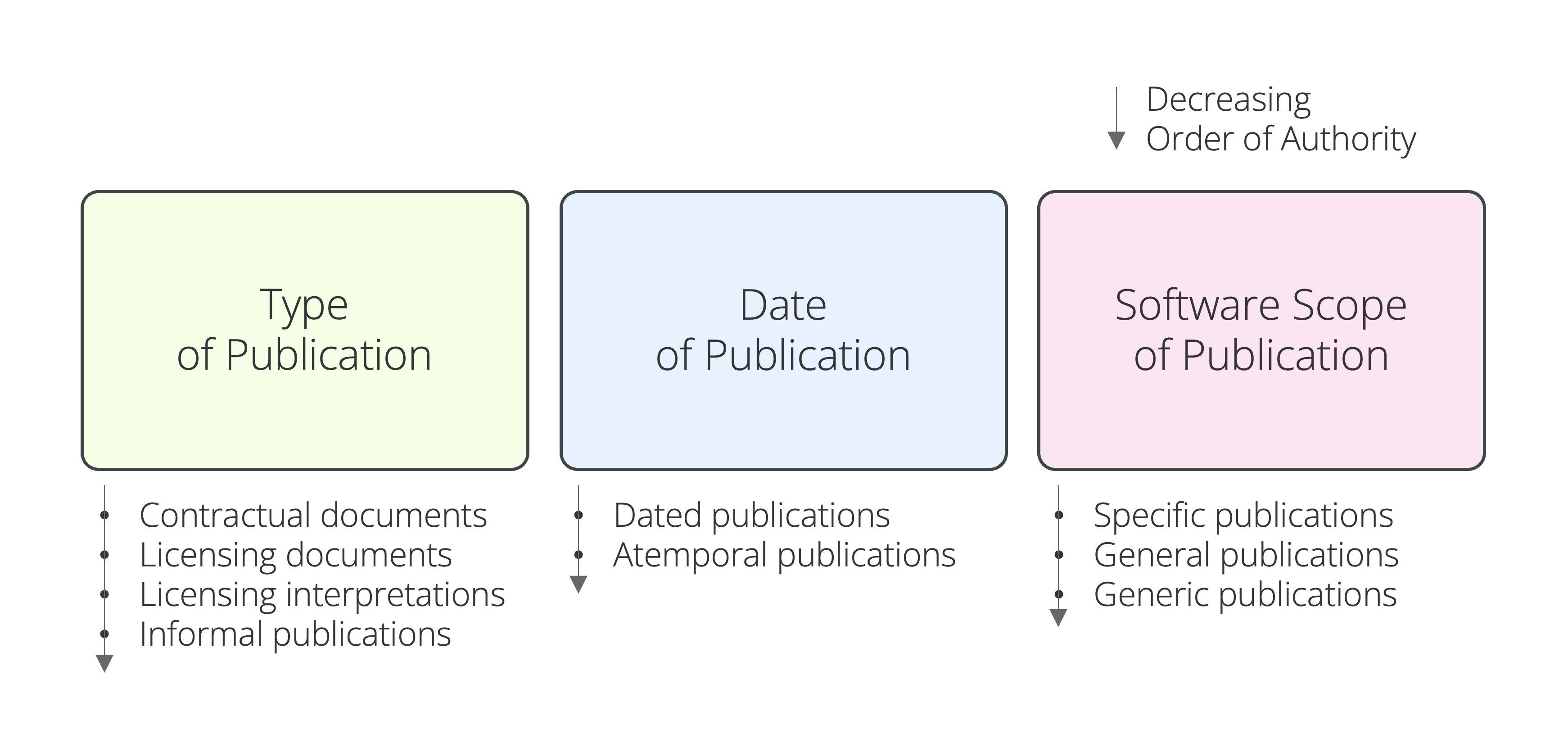
Exhibit 3: Oracle Publications in Decreasing Order of Authority
Type of Publication
Oracle materials are grouped into four hierarchy levels, ordered in decreasing legal and analytical authority:
-
Contractual documents – Agreements or license terms governing use, including signed customer agreements and accepted online license terms. Because customer-specific terms vary, this publication focuses on standard or publicly available Oracle terms except where customer-specific agreement types are explicitly modeled.
-
Licensing documents – Publicly available terms published on Oracle’s website. Customers must proactively locate and interpret them
-
Licensing interpretations – Guidance shared during commercial presentations or published on Oracle’s website. These may or may not be provided to all customers
-
Informal publications – Include blogs, announcements, emails, and meeting minutes
Date of Publication
The date of publication is relevant, as newer documents may complement, clarify, or supersede earlier guidance, subject to the applicable contractual hierarchy:
-
Dated publications – Include signed contracts or officially released licensing documentation (hierarchy of authority decreasing from most recent to oldest publications)
-
Atemporal publications – Include undated sources such as webpages and blogs
Software Scope
The relevance of a publication is influenced by how directly it relates to the software under consideration. In decreasing authority:
-
Specific publications (license specific) – Concerning specifically Oracle Database, including its Enterprise Options and Management Packs
-
General publications – Not directly targeting Oracle Database, but nevertheless applicable to Oracle Database and other Oracle software
-
Generic publications – Primarily concerning other Oracle software, which may still provide generic guidelines about environment classification
2.2 Oracle Licensing Publications Considered
Three publications have been selected for analysis, each providing direct or indirect definitions relevant to environment classification:
-
Oracle Technology Network Licensing Terms (2014), a contractual document
-
Oracle Database Licensing (2015), a licensing document relevant to Oracle Database
-
Oracle Software Licensing Basics (2024), a licensing interpretation
These publications concern Oracle Database licensing and fall into the categories of contractual document, licensing document, or licensing interpretation.
-
Compatibility will be marked as ✓, for example "✓ Production", means "compatible with production"
-
Incompatibility will be marked as ✕, for example "✕ Development", means "incompatible with development"
Additional publications relevant to Oracle Database licensing, but lacking explicit classification of environments, will also be mentioned.
Legend: ✓ Yes – ✕ No
|
Oracle Technology Network Licensing Terms (2014)
|
✓ Yes
|
✓ Yes
|
Contractual document
|
|
Oracle Database Licensing (2015)
|
✓ Yes
|
✓ Yes
|
Licensing document
|
|
Oracle Software Licensing Basics (2024)
|
✓ Yes
|
✓ Yes
|
Licensing interpretation
|
|
Additional publications lacking explicit classification of environments:
|
|
Database Licensing Information User Manuals (19c, 21c, 26ai)
|
✓ Yes
|
✕ No
|
Licensing document
|
|
Oracle Technology Global Price List (2026)
|
✓ Yes
|
✕ No
|
Licensing document
|
|
Oracle Partitioning Policy (2014)
|
✓ Yes
|
✕ No
|
Licensing document
|
Exhibit 4: Oracle Publications Relevant to Oracle Database Licensing
2.3 OTN Licensing Terms (2014): Contractual Document
⇩ All referenced Oracle documentation is available in the downloadable source materials [➜ Chapter 6 – Sources and Scenario Calculation Files to Download].
The Oracle Technology Network (OTN) Licensing Terms (dated 09 September 2014) constitute contractual terms that users must accept before using the software under that license. Uses that fall outside those terms are not covered by the OTN Developer License and require another applicable licensing basis.
The OTN Developer License states:
"Oracle is willing to authorize Your access to software associated with this License Agreement ("Agreement") only upon the condition that You accept that this Agreement governs Your use of the software" (ref. Oracle OTN Developer License Terms, standard license, updated 09 Sept. 2014, retrieved in Feb. 2025).
▶ Understanding Oracle licensing – Using OTN as the licensing basis for an Oracle software deployment requires compliance with the applicable OTN license agreement, including its obligations and restrictions. Failure to comply with an applicable condition – or inability to demonstrate compliance – may mean that the deployment is not covered by the OTN license and requires another licensing basis.
Furthermore, the OTN Developer License states:
"Oracle grants You a (…) limited license to internally use the Programs (…) only for the purpose of developing, testing, prototyping, and demonstrating Your application and only as long as Your application has not been used for any data processing, business, commercial, or production purposes, and not for any other purpose." (ref. Oracle OTN Developer License Terms, standard license, updated 09 Sept. 2014, retrieved in Feb. 2025).
▶ Understanding Oracle licensing – The OTN license is limited to internal use, meaning use by employees (employment contract with the organization) and consultants and contractors (contracted and acting on behalf of the organization). It can therefore be derived that use by external parties, such as customers or service providers acting for their own purposes, is incompatible with the license.
The OTN license permits developing, testing, prototyping, and demonstrating the application. Accordingly, use for data processing, business, commercial, or production purposes is excluded.
The OTN license restriction goes further by creating a click effect: once the application has been used at any point in time for any excluded purpose – data processing, business, commercial, or production – the condition that the application has not been used for such purposes is no longer satisfied. From that point onward, OTN should no longer be relied upon as the licensing basis for Oracle environments supporting that same application. In other words, even subsequent development, testing, prototyping, and demonstration of that application should no longer be licensed under OTN.
The phrase not for any other purpose functions as a catch-all provision. Uses falling outside the expressly permitted purposes should therefore be treated as not permitted under the OTN license.
Versioning and the OTN eligibility boundary
The OTN Developer License links its permitted use to the lifecycle of the application, not to the name of an environment or the numbering of software releases. In practice, a change from version 1.0 to 1.1 or 2.0 does not automatically start a new application lifecycle and does not always create a new OTN-eligible application. Once an application has been used for data processing, business, commercial, or production purposes, OTN should no longer be used as the licensing basis for Oracle deployments supporting that application, including development and test environments for later releases.
From a Software Asset Management perspective, the safe approach is therefore to treat OTN as a pre-production development license that applies only until the first production or commercial use of the application. Continued use of Oracle software for subsequent releases should then be covered by an appropriate commercial license model.
A different OTN eligibility analysis may be possible only where the organization can demonstrate that the work concerns a genuinely distinct and independent application rather than a later release or update of the same application. In SAM terms, this requires clear separation of scope and lifecycle, supported by technical and operational evidence such as a separate codebase or product identity, strict isolation from production systems and live data, and access restricted to internal developers and authorized contractors.
OMTCO recommends that customers document whether development work concerns the same application lifecycle or a genuinely distinct application if they intend to rely on OTN licensing. In any case, customers should be prepared to substantiate their reliance on OTN licensing to Oracle representatives.
Availability to Third Parties
Another clause specifies:
"Further, You may not: (…) make the Programs available in any manner to any third party (other than Contractors acting on Your behalf as set forth in this Agreement); (…) use the Programs to provide third party training" (ref. Oracle OTN Developer License Terms, standard license, updated 09 Sept. 2014, retrieved in Feb. 2025).
▶ Understanding Oracle licensing – This restriction means that the Oracle software may not be made available to third parties other than consultants and contractors acting on the customer’s behalf (➜ contracted), as provided by the license terms. The key question is what the word "available" means in practice (see paragraph below "Availability and Training").
Furthermore, third-party training – such as training customers, suppliers, or business partners – is explicitly prohibited.
Internal training, on the other hand, is not expressly prohibited in the same way. However, under the OTN licensing terms, it should only be considered permissible where it forms part of one of the expressly permitted purposes – developing, testing, prototyping, or demonstrating the application – rather than constituting a separate training purpose.
Availability and Training
In this clause, the phrase “make the Programs available in any manner to any third party” should be understood broadly. It is not limited to distributing copies of the software. In a Software Asset Management context, it means allowing any third party to access, use, or benefit from the Oracle Programs by any technical or organizational method, including direct login, network connectivity, shared environments, hosted access, portals, APIs, or service delivery. The key question is whether a third party can interact with Oracle software or receive a service that depends on it. If yes, the Programs have been made available to that third party.
The OTN terms provide one explicit exception: contractors acting on the customer’s behalf. This is generally interpreted as external staff working under the customer’s direction and control for the customer’s internal purposes. Contractors may contribute to development and testing on the customer’s behalf; they should not use the Programs or their functionality for their own benefit.
This clause does not extend to customers, partners, or external users who access the environment for their own purposes, using and benefiting from the Programs, nor to service providers delivering services to third parties.
Similarly, third-party training is explicitly prohibited, meaning that training customers, partners, suppliers, or other external audiences is not permitted. Internal training of employees or contractors must still be assessed against the affirmative purposes permitted by the applicable OTN license terms; such training is permissible only if it forms part of one of the expressly permitted purposes – developing, testing, prototyping, or demonstrating the application.
Training conducted for production purposes should therefore, as a matter of caution, not be treated as permitted under OTN, although the OTN terms are not explicit on this point.
OMTCO recommends that customers distinguish employees and contractors from other third parties. Employees have an employment relationship with the customer. Contractors act on the customer’s behalf and may contribute to development or testing without using the Programs for their own benefit. Other third parties – such as customers, partners, and external users – access or benefit from the environment for their own purposes.
Legend: ✓ Yes – ✕ No
|
Have a work contract
|
✓ Yes
|
✕ No
|
✕ No
|
|
Access the Programs for their own benefit,
use Programs’ functionalities
|
✓ Yes
or
✕ No
|
✕ No
|
✓ Yes
|
|
Contribute to the Programs (development / test)
|
✓ Yes
or
✕ No
|
✓ Yes
|
✕ No
|
Exhibit 5: Differentiation Employees vs. Contractors vs. External Users
Conclusion
The exhibit summarizes how the OTN Licensing Terms classify environments based on user type, purpose, and activity.
Legend: ✓ Compatible – ✕ Incompatible
|
Users
|
Internal users
|
N/A
|
to internally use
|
✓ Development
|
|
Purpose
|
Development
|
N/A
|
only for the purpose of developing
|
✓ Development
|
|
Purpose
|
Test
|
N/A
|
only for the purpose of (…) testing
|
✓ Development
|
|
Purpose
|
Prototyping
|
N/A
|
only for the purpose of (…) prototyping
|
✓ Development
|
|
Purpose
|
Demonstration
|
N/A
|
only for the purpose of (…) demonstrating
|
✓ Development
|
|
Activity
|
Data processing
|
Click effect
|
not been used for any data processing
|
✕ Development
|
|
Activity
|
Business
|
Click effect
|
not been used for (…) business (…) purposes
|
✕ Development
|
|
Activity
|
Commercial
|
Click effect
|
not been used for (…) commercial (…) purposes
|
✕ Development
|
|
Activity
|
Production
|
Click effect
|
not been used for (…) production purposes
|
✕ Development
|
|
Activity
|
Any other
|
Click effect
|
not [been used] for any other purpose
|
✕ Development
|
|
Activity
|
Training
|
Third party
|
may not (…) provide third party training
|
✕ Development
|
Exhibit 6: Classification of Environments from OTN Licensing Terms
It confirms that the OTN Developer License permits the specified internal development-related activities only while the application remains within the license conditions, whereas prohibited commercial, operational, production, or unauthorized third-party use falls outside the OTN license grant.
2.4 Oracle Database Licensing (2015): Licensing Document
⇩ All referenced Oracle documentation is available in the downloadable source materials [➜ Chapter 6 – Sources and Scenario Calculation Files to Download].
According to the 2015 Oracle Database Licensing document, specific uses are explicitly excluded from development-environment use under the OTN License Agreement:
"Development Environment: (…) Customers may not use Oracle Database, as licensed under the OTN License Agreement, in connection with any classroom activity, internal data processing operations, or any other commercial or production use purposes. (…) If a customer wants to use Oracle Database, as licensed under the OTN License Agreement, for any purposes other than the limited development rights granted by that license, including deployment of an application developed under an OTN License Agreement, he will need to contact Oracle (…) to obtain the appropriate licenses." (ref. Oracle database licensing, document #070584, dated 2015).
▶ Understanding Oracle licensing – This clarifies that development environments exclude the following: Training activities (e.g., classroom use), internal data processing operations, commercial or production use, and deployment activities.
Additionally, the software may not be made available to third parties other than the customer’s own internal contractors. The same licensing documentation also defines production and test environments:
"(…) Production Environment: The environment used by end users for business or other operations is called a production environment. All programs used in the production environment must be licensed under an OMA, OLSA, or other appropriate Oracle (or Oracle authorized reseller) license agreement. " (ref. Oracle database licensing, document #070584, dated 2015).
"(…) Test Environment: All programs used in a test environment must be licensed under an OMA, OLSA, or other appropriate Oracle (or Oracle authorized reseller) license agreement. " (ref. Oracle database licensing, document #070584, dated 2015).
▶ Understanding Oracle licensing – While production environments are defined as environments used by end users for business or other operations, the cited text does not itself define what constitutes a test environment. Customers should search for guidance in additional Oracle sources.
Conclusion
The exhibit summarizes environment classifications based on the 2015 Oracle Database Licensing document, highlighting key incompatibility and licensing constraints.
Legend: ✓ Compatible – ✕ Incompatible
|
Activity
|
Training
|
Classroom
|
may not use (…) in connection with any classroom activity
|
✕ Development
|
|
Activity
|
Data
|
Internal data processing
|
may not use (…) in connection with (…) internal data processing operations
|
✕ Development
|
|
Activity
|
Commercial use
|
N/A
|
may not use (…) in connection with (…) any other commercial (…) use purposes
|
✕ Development
|
|
Activity
|
Production use
|
N/A
|
may not use (…) in connection with (…) any other (…) production use purposes
|
✕ Development
|
|
Activity
|
Deployment
|
Application deployment
|
for any purposes (…), including deployment of an application developed under an OTN License Agreement
|
✕ Development
|
|
Users
|
End users
|
For business or other operations
|
used by end users for business or other operations
|
✓ Production
|
|
Activity
|
Test
|
N/A
|
used in a test environment
|
✓ Test
|
Exhibit 7: Classification of Environments from Oracle Database Licensing
It confirms that Oracle imposes strict limitations under the OTN License and differentiates between production, test, and development environments. Specifically, end-user access, business-related activities, and the test environments described in the cited document require licensing outside the OTN development rights.
2.5 Oracle Software Licensing Basics (2024): Licensing Interpretation
⇩ All referenced Oracle documentation is available in the downloadable source materials [➜ Chapter 6 – Sources and Scenario Calculation Files to Download].
The document Oracle Software Licensing Basics (updated July 2024) provides the following definition:
"Non-Production Environments (are defined as) Development / Quality Assurance / Testing & Staging / Disaster Recovery. (…) Customer can obtain development licenses that are limited to development activities per the Oracle Developer Downloads guidelines. See the Oracle Technology Network OTN License Agreement for further details." (ref. Oracle Software Licensing Basics, page 7, published July 2024).
▶ Understanding Oracle licensing – This text identifies development, quality assurance, testing and staging, and disaster recovery as non-production categories. It refers to additional resources, specifically the Oracle Developer Downloads webpage and the OTN License Agreement, for licensing details. However, it does not define these environments or establish that every environment in these categories qualifies for no-cost OTN licensing; eligibility must still be assessed against the applicable license terms.
The Oracle Developer Downloads webpage, referenced in the document, states:
"Developer Downloads – All software downloads are free, and most come with a Developer License that allows you to use full versions of the products at no charge while developing and prototyping your applications, or for strictly self-educational purposes." (ref. Developer Downloads, unknown publication date, retrieved Feb. 2025)
This source introduces the term "Developer License," which does not appear verbatim in the OTN License but is aligned with its language. It limits permitted activities to development, prototyping, and self-education.
The environments listed in Oracle Software Licensing Basics and clarified in the Developer Downloads webpage include:
-
Development environments – They may be eligible for OTN licensing, subject to the applicable OTN terms
-
Quality assurance, testing, staging, and disaster recovery environments – They are listed as non-production categories, but this classification alone does not establish OTN eligibility
The Developer Downloads webpage gives additional detail on acceptable development use:
Both Oracle Software Licensing Basics (2024) and the Developer Downloads webpage (unknown publication date, retrieved Feb. 2025) provide high-level guidance and do not replace the applicable OTN license terms. OTN eligibility should therefore be assessed against the governing license agreement.
Conclusion
The exhibits summarize how Oracle Software Licensing Basics classifies non-production categories and how the Developer Downloads webpage describes permitted developer uses.
Software Licensing Basics defines an environment compatibility for non-production with various usages (including Development, Quality Assurance…). However, they are not automatically eligible for OTN licensing.
Legend: ✓ Compatible – ✕ Incompatible
|
Activity
|
Development
|
N/A
|
defined as Development
|
✓ Non-production
|
|
Activity
|
Quality Assurance
|
N/A
|
defined as (…) Quality Assurance
|
✓ Non-production
|
|
Activity
|
Test
|
N/A
|
defined as (…) Testing & Staging
|
✓ Non-production
|
|
Activity
|
Disaster Recovery
|
N/A
|
defined as (…) Disaster Recovery
|
✓ Non-production
|
Exhibit 8: Classification of Environments from Oracle SW Licensing Basics
Legend: ✓ Compatible – ✕ Incompatible
|
Activity
|
Development
|
N/A
|
while developing (…) your applications
|
✓ Development
|
|
Activity
|
Prototyping
|
N/A
|
while (…) prototyping your applications
|
✓ Development
|
|
Activity
|
Training
|
N/A
|
for strictly self-educational purposes
|
✓ Development
|
Exhibit 9: Classification of Environments from Oracle Developer Downloads
Development and prototyping are expressly referenced in the applicable Developer Downloads guidance. Other labels, such as staging, testing, and disaster recovery, do not by themselves establish Developer Downloads eligibility.
2.6 Other Oracle Licensing Documents
Other Oracle licensing documents contain specific provisions that may affect licensing in non-production environments.
The documents listed below are not analyzed in detail because their provisions relate to specific products, features (Enterprise Options and Management Packs), metrics or deployment models rather than to general rules for non-production licensing.
Careful review of these documents is nevertheless recommended, as they may contain obligations relevant to specific use cases in non-production environments.
⇩ All referenced Oracle documentation is available in the downloadable source materials [➜ Chapter 6 – Sources and Scenario Calculation Files to Download].
Database Licensing Information User Manual
Oracle publishes release-specific Database Licensing Information User Manuals. In May 2026, relevant manuals included those for Oracle Database 19c, Oracle Database 21c, and Oracle AI Database 26ai.
These manuals primarily describe Database offerings and the licensing of features, Options and Management Packs. They contain provisions relevant to development, testing, replay, staging and standby environments, but these provisions are feature- or product-specific. These provisions do not define non-production environments or establish a general (not feature-specific) licensing framework for them.
Oracle License Definitions and Rules Booklet
The Oracle License Definitions and Rules Booklet contains licensing definitions and specific rules applicable to Oracle Technology programs, including Oracle Database. The March 2026 version includes specific provisions for Failover and Testing.
These provisions do not define non-production environments or establish a general licensing framework for them. The Testing provision is narrowly limited to testing physical copies of backups, while the Failover provision concerns the temporary use of an unlicensed spare server under defined conditions. They therefore address specific backup, recovery and availability scenarios rather than general Development, Quality Assurance, User Acceptance Testing or other non-production environments.
Oracle Partitioning Policy
The Oracle Partitioning Policy defines Oracle’s treatment of soft partitioning, hard partitioning and Oracle Trusted Partitions when determining the number of Processor licenses required. These rules can affect the licensing scope of virtualized non-production environments, including environments licensed under Full Use licenses, but are not specific to non-production.
Licensing Oracle Software in the Cloud Computing Environment
The Licensing Oracle Software in the Cloud Computing Environment policy defines Oracle’s licensing rules for Authorized Cloud Environments, including AWS, Microsoft Azure and Google Cloud Platform. These rules apply equally to production and non-production deployments and are therefore not analyzed separately as non-production licensing rules.
2.7 So… How to Define Non-Production?
In an Oracle compliance context, defining non-production is not about what an environment is called, but about what it is used for – and which licensing terms apply to that use. To assess an environment correctly, the first step is to select the relevant reference documents and apply them in the order of precedence.
As discussed previously, Oracle publications do not carry the same weight. For practical Software Asset Management and compliance work, this publication prioritizes sources using three criteria: document type, date, and product scope.
Product-specific contractual or licensing documents generally carry greater weight than general primers or secondary guidance. More recent publications may clarify definitions and common scenarios, but they should be read consistently with the governing contractual terms.
Starting Points
For Oracle Database, the most relevant starting points are the Oracle Technology Network Licensing Terms (2014) for OTN use cases, Oracle Database Licensing documentation (2015) for metric and deployment rules, and Oracle Software Licensing Basics (2024) for consolidated terminology and general principles. If these do not fully address a specific deployment situation, additional Oracle materials should be consulted.
A simple compliance rule is to read sources top-down in the order of authority / precedence: confirm what is permitted, identify what is explicitly restricted, then document how the environment fits within both the permissions and the restrictions.
For example, an environment described internally as Test may fall outside a particular non-production licensing basis if its actual use includes live business data processing, unauthorized external access, revenue-generating services, or production connectivity inconsistent with the applicable license terms. Conversely, a shared development platform accessed by multiple engineers may still qualify as non-production if its use is strictly limited to development and testing activities and the boundaries are documented and enforced.
The result is a defensible classification that can be explained clearly to internal stakeholders and, if needed, to Oracle License Management Services (LMS) or Oracle Global License Advisory Services (GLAS). The practical objective is not legal interpretation for its own sake, but a repeatable SAM method: use the right documents, apply them consistently, and document the operational facts that support the environment classification.
A consistent classification across multiple non-production environments reduces the risk of relying on internal labels that do not reflect actual use. Periodic review is important, particularly when environments may change or be repurposed.
3 Oracle Database Licensing Models (On-Premises)
This chapter examines the principal Oracle Database licensing models available for on-premises deployments and explains how their respective rights, restrictions, costs, and compliance requirements differ.
3.1 Oracle Database Licensing Models for On-Premises Deployments
Only on-premises deployments of Oracle Database are considered in this publication.
Oracle Offerings Not Included in this Publication
Oracle Cloud – Cloud environments follow different licensing models and are not included in this publication.
Specific Offerings – Licensing models serving commercial, educational, or partnership use cases are not included in the scope of this publication, such as:
-
Oracle Partner Network licenses (OPN) for Oracle partners,
-
Oracle Academic Initiative licenses (OAI) for educational institutions, restricted to teaching and research,
-
Proprietary Hosting Licenses (PHL) for independent software vendors (ISV) and managed service providers (MSP) hosting Oracle software for third parties, and
-
Various commercial proof of concept (PoC) and trial licenses with limited duration (30–90 days) and restricted to evaluation, testing, or pilot deployments.
Oracle Database On-Premises Licensing Models – ESL, ASFU, OTN and FU
Oracle provides four primary licensing models for on-premises deployments of Oracle Database, each subject to specific restrictions and conditions:
-
Embedded Software License (ESL),
-
Application Specific Full Use (ASFU),
-
Oracle Technology Network (OTN),
-
and Full Use (FU).
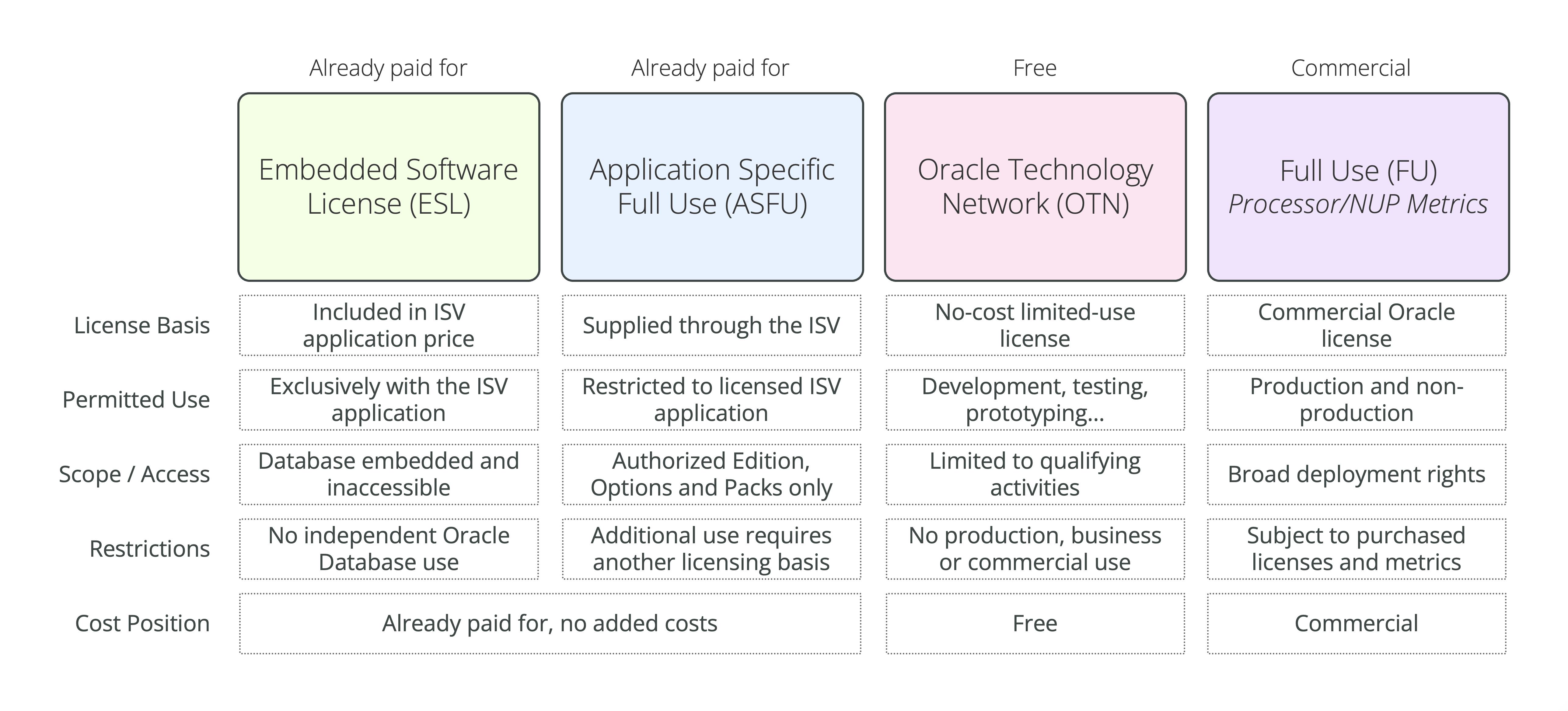
Exhibit 10: Oracle Database Licensing Models – ESL, ASFU, OTN and FU
Embedded Software License (ESL) – A highly restricted license bundled with an ISV application. Oracle Database is not exposed or directly accessible to the customer, meaning users interact solely with the application without direct access to or control over the underlying database.
Application-Specific Full Use (ASFU) – A restricted license available only when purchasing an application from an Independent Software Vendor (ISV). The ISV is responsible for communicating all usage restrictions to the customer through its licensing agreement. This license limits the Oracle software’s use strictly within the ISV application context.
Oracle Technology Network (OTN) – A no-cost, limited-use license governed by the applicable OTN terms. For the Oracle Database terms analyzed in this publication, the permitted purposes include developing, testing, prototyping, and demonstrating the application, subject to the stated restrictions.
Full Use (FU) – A general-purpose commercial license that allows broad deployment across different environments. Technical and licensing constraints still apply, depending on the edition of the software deployed.
3.2 Embedded Software License (ESL) [Already Paid for]
An Embedded Software License (ESL) is designed to embed Oracle Database technology within the ISV application purchased by the customer. Oracle Database remains inaccessible and, in many cases, invisible to the end user, integrated within the application code. ISVs are typically not allowed to document or expose the existence of Oracle Database separately within their software.
From the customer’s perspective, an ESL license generally does not require a separate Oracle license purchase because the Oracle technology is included in the price of the ISV application.
The essential characteristic of ESL licensing is that the customer interacts only with the ISV application without any direct access to Oracle Database. Any direct modification, administrative access, or external use of Oracle Database is strictly prohibited.
Pricing
ESL pricing is negotiated between Oracle and the ISV and is generally not disclosed to the end customer.
ESL licenses are reportedly offered to ISVs at substantial discounts, potentially > 90% below Oracle’s public pricing. This allows the ISV to incorporate Oracle Database into its application without requiring the customer to purchase a separate Oracle Database license. The cost of the Oracle Database license is therefore indirectly borne by the customer through the price of the ISV application license.
Examples
Examples of ESL licenses include Oracle Database embedded within:
-
Network management systems, such as Cisco Prime Infrastructure
-
Telecommunication billing platforms, such as Amdocs Billing
-
Industrial automation software, such as JR Automation Solutions
-
Picture Archiving and Communication Systems (PACS), such as Philips Vue
-
Medical imaging applications, such as those developed by Clalit Health Services
In each case, Oracle Database operates entirely within the ISV’s application framework and remains hidden from the end user.
3.3 Application Specific Full Use (ASFU) License [Already Paid for]
ASFU licenses are intended for use only with the application provided by the Independent Software Vendor (ISV) to the customer. The customer maintains a direct licensing agreement with the ISV but does not have a direct licensing or purchase agreement with Oracle. The ISV enters a licensing contract with Oracle to purchase ASFU licenses and is authorized to resell them as part of their offering. The ISV must communicate all applicable licensing restrictions to the customer.
From the customer’s perspective, an ASFU license generally does not require a separate Oracle license purchase because the Oracle license is supplied through the Independent Software Vendor as part of the licensed application.
Pricing
ASFU pricing is negotiated between Oracle and the ISV and is generally not disclosed to the end customer.
ASFU licenses are reportedly offered to ISVs at substantial discounts, potentially > 50% below Oracle’s public pricing. This allows the ISV to incorporate Oracle Database into its application without requiring the customer to purchase a separate Oracle Database license. The cost of the Oracle Database license is therefore indirectly borne by the customer through the price of the ISV application license.
Restrictions
ASFU licenses include two primary types of restrictions: restrictions related to deployment and restrictions related to usage.
Restricted deployment – Only a specific edition of Oracle Database may be deployed, and only selected Enterprise Options and Enterprise Management Packs may be used. Deploying a different edition or using unauthorized Options or Packs may fall outside the ASFU rights. In such cases, the environment requires another applicable licensing basis, typically Full Use (FU) or, in limited eligible scenarios, OTN.
Restricted usage – Oracle Database licensed under ASFU terms may be used exclusively within the scope of the licensed ISV application. Use for another application or purpose may fall outside the ASFU rights (check your ASFU agreement). Data exchange or technical integration with other applications must therefore be assessed against the specific ASFU agreement. Integrations or automated data extraction outside the authorized application scope may require another applicable licensing basis, typically Full Use (FU).
Examples
Examples of ASFU licenses include Oracle Database deployments used for:
-
Enterprise Resource Planning (ERP) applications, such as SAP or JD Edwards EnterpriseOne
-
Customer Relationship Management (CRM) applications, such as Siebel or PeopleSoft
-
Retail Point of Sale (POS) systems, such as Oracle Simphony
3.4 Oracle Technology Network (OTN) Standard License [Free]
OTN licensing is governed by the Oracle Technology Network License Agreement, last updated on 9 September 2014.
Note: Several versions of the OTN license exist, each applying different obligations depending on the Oracle software. Separate OTN terms cover Oracle Java SE, SQL Developer, WebLogic Developer, JDeveloper, and other products. Customers should refer to the applicable OTN license for the specific software deployments. This section focuses exclusively on the OTN standard license applicable to Oracle Database.
In 2014, Oracle revised the OTN Developer License, removing earlier constraints that limited usage to a single developer and to installation on an individual desktop machine ("personal computer"). As a result, the OTN license began to allow shared, centralized non-production environments used for development, testing, prototyping, and demonstration activities. This Oracle decision made the OTN license more flexible, allowing a development server to be accessed concurrently by multiple developers.
OTN licensing is available at no charge.
The OTN Developer License Terms (Standard license) state:
"Oracle grants You a nonexclusive, nontransferable, limited license to internally use the Programs, subject to the restrictions stated in this Agreement, only for the purpose of developing, testing, prototyping, and demonstrating Your application and only as long as Your application has not been used for any data processing, business, commercial, or production purposes, and not for any other purpose." (ref. Oracle OTN Developer License Terms, standard license, updated 09 Sept. 2014, retrieved in Feb. 2025).
▶ Understanding Oracle licensing – These terms authorize the use of Oracle Database strictly for development, testing, prototyping, and demonstration activities. The license applies only during the initial development phase, before the application has been used for data processing, business, commercial, or production purposes. Once any production or commercial use occurs, OTN licensing is no longer permitted. Oracle does not define these terms, so customers must interpret them conservatively. As a rule, if it is unclear whether an activity is permitted under Oracle licensing, it should be treated as not permitted. Access by customers or providers, generation of revenue, or processing of customer data typically indicates that OTN licensing is no longer valid.
The OTN Developer License Terms also state:
"Further, You may not: (…) use the Programs to provide third party training" (ref. Oracle OTN Developer License Terms, standard license, updated 09 Sept. 2014, retrieved in Feb. 2025).
▶ Understanding Oracle licensing – Third-party training involving customers, suppliers, business partners, or other external audiences is expressly prohibited. Internal training of employees or contractors should not be assumed to be permitted solely because it is not third-party training; it must still fall within an affirmative purpose permitted by the applicable OTN license terms.
OTN licensing is a separate no-cost licensing basis for eligible uses. Where the applicable OTN conditions are not met, another licensing basis, such as Full Use (FU), is required. Conversely, a customer may still choose Full Use licensing even where OTN eligibility exists.
OTN licensing is limited to the purposes expressly stated in the applicable OTN terms – developing, testing, prototyping, and demonstrating the application – and does not authorize production use. Environment labels such as staging do not by themselves establish OTN eligibility. Other Oracle products may be distributed under different OTN or developer license terms. Customers must therefore apply the license terms specific to each Oracle product.
Examples of Activities Expressly Permitted under OTN (Selected Examples)
The following activities are expressly referenced in the OTN license grant analyzed in this publication.
Non-Production Use:
-
Development – Writing and refining application code for a software solution using Oracle Database as a repository
-
Testing – Validating software functionality with controlled datasets
-
Prototyping – Constructing proof-of-concept models to evaluate technical feasibility.
-
Demonstration – Exhibiting an application to internal stakeholders or project sponsors
-
Staging – The label "staging" does not itself confer OTN eligibility.
A staging environment may qualify only if its actual use remains within testing or prototyping activities, both of which are OTN-eligible. In such cases, staging should be limited to preparing an application for production release using production-like datasets. Such datasets should be anonymized or otherwise rendered non-operational, and no data should be fed back into production. Documentation of the test procedures and dataset anonymization should be available.
Usage:
-
Manual data feed – The OTN terms do not establish a general safe harbor for the use of production data in testing or staging environments. To reduce compliance risk, OMTCO recommends that any transfer of data from a production environment into a test or staging environment be manual rather than automated, occur only infrequently, and involve production data that has been sufficiently modified or anonymized so that it is no longer operationally usable in a production context. The data transfer procedure, including the frequency, operational method, and data-transformation controls applied, should be fully documented.
Environments Not Permitted under OTN (Selected Examples)
The Oracle Technology Network (OTN) Developer License is strictly limited to development-related activities. The following environment types are not compatible with OTN licensing.
Commercial and Production Use:
-
Production environments – Any environment used for live data processing, operational workloads, business functions, or service delivery, including environments accessed by customers or leveraged by service providers to deliver production services.
-
Commercial environments – Any environment directly or indirectly associated with revenue-generating activities, monetized services, or commercial exploitation.
-
Externally facing environments – Any environment accessible to external users, except where access is strictly limited to an organization’s designated contractors performing development or testing activities on its behalf.
Training Environments (external facing only):
Environment Contamination and Mixed Usage:
-
Connected environments – Connectivity to production is a significant risk indicator and must be assessed based on the environment’s actual use. If production data is fed into the environment, particularly through automated or continuous interfaces, or, more critically, if data is fed back from the environment into production, the environment should be treated as not permitted under OTN.
-
Live data feeds – Automated or continuous production data feeds create a high risk that the environment falls outside the permitted OTN purposes and should therefore be avoided when relying on OTN. A live data feed from any production environment disqualifies the environment from OTN licensing.
-
Mixed-purpose environments – Any environment supporting both permitted development or testing activities and non-permitted production, commercial, or training activities.
-
Undetermined usage environments – Any environment where the purpose, data origin, or usage cannot be clearly identified and justified as compliant with OTN restrictions.
Standard and Procedural Violations:
-
License-source violations – Any Oracle Database deployment where the software has not been obtained under the applicable OTN license terms (OTN download portal).
-
Application lifecycle boundary ("click effect", effectively a permanent disqualification under this interpretation) – Once the application has been used for data processing, business, commercial, or production purposes, the quoted OTN license grant no longer applies to that application on the same basis, even for subsequent non-production use. Any subsequent use of Oracle Database supporting that application must therefore be assessed under an appropriate commercial licensing model, such as Full Use (FU), ASFU, or ESL.
3.5 Full Use (FU) Licensing
Full Use (FU) licensing represents the general-purpose commercial licensing model intended as the default for Oracle Database environments. Whenever no other Oracle licensing model applies – such as ASFU, ESL, or OTN – customers are required to license their Oracle environments under Full Use terms.
Customers purchasing FU licenses typically do so under an Oracle Master Agreement (OMA) or another applicable Oracle agreement. FU licenses are ordered and paid for directly to Oracle or through an Oracle-authorized reseller.
Even if an environment qualifies for ASFU licensing, already paid for through the ISV arrangement, or for free OTN licensing, customers may still choose to license it under commercial Full Use (FU) terms. This may make sense, for example, if suitable Oracle licenses are already available and unused, or if the environment is expected to cease to qualify for OTN in the future.
For ESL deployments, separate Oracle Database licensing by the customer generally does not arise while the database remains fully embedded and inaccessible under the ISV arrangement.
FU licenses authorize deployment across any type of environment, both production and non-production. Pricing and restrictions under FU licensing depend on the edition selected and the applicable licensing metric. For example, Oracle Database Enterprise Edition (EE) licenses are more expensive than Oracle Database Standard Edition 2 (SE2) licenses but provide broader capabilities, including fewer restrictions on processor or socket limits and eligibility for enhancements through Oracle Enterprise Options and Management Packs.
Remarks on FU License Costs
Environments licensed with Oracle Database Enterprise Edition (EE) are more expensive than those licensed with Standard Edition 2 (SE2) for two main reasons: the unit price and the counting method.
First, under the Processor metric, the public unit price of EE is approximately 2.7 times the price of SE2.
Second, the counting methods differ: EE processor licensing is based on the relevant physical cores adjusted by the Oracle Processor Core Factor (25%, 50%, 75% or 100%, depending on the processor type), whereas SE2 processor licensing is based on the applicable physical processor sockets under the SE2 licensing rules. As a result, EE deployments may require significantly more licenses than comparable SE2 deployments.
3.6 Comparison Overview of ESL, ASFU, OTN, and FU
The following tables compare the four Oracle licensing models – ESL, ASFU, OTN, and FU – across four criteria: general characteristics, costs, permitted use, and compliance.
The tables show the trade-offs between licensing flexibility, cost, permitted use, and compliance obligations. Restricted models such as ESL, ASFU, and OTN may reduce or avoid additional Oracle licensing costs, but only where their specific conditions are satisfied. Full Use provides the broadest usage rights, while requiring commercial licensing under the applicable Processor or Named User Plus (NUP) metric.
Concerning General Characteristics
|
Principle
|
"Embedded and inaccessible"
|
"Restricted to an application"
|
"For development"
|
"General-purpose use"
|
|
Restrictions
|
Must be part of an integrated software solution, no direct access to Oracle software
|
Can only be used within the vendor’s specific application, in the authorized edition, with the authorized Options/Packs
|
Not allowed for production, business, or commercial use
|
Broad use rights, subject to the applicable Oracle license terms, purchased products, editions, and metrics
|
|
Metric
|
N/A
|
N/A
|
N/A
|
Processor or Named User Plus (NUP)
|
|
Technical Modifications of Oracle Database
|
✕ No modification is permitted
|
⚠ Few modifications are permitted, only within the ISV licensing agreement
|
⚠ Subject to the applicable OTN terms; no right to modify Program source code unless expressly licensed
|
✓ Yes – All modifications are permitted within the Oracle license agreement
|
|
Support
|
Support is provided by the ISV to the customer for the application, while Oracle Database is usually invisible and inaccessible to the customer
|
Support for deployment and configuration is provided by the ISV to the customer for all components, including the Oracle Database
|
Only Oracle community support
|
Standard Oracle support and updates available to customers paying for maintenance and support
|
Exhibit 11: Oracle Licensing Models (FU, ASFU, ESL, OTN) – General
Concerning Costs
|
Principle
|
"Embedded and inaccessible"
|
"Restricted to an application"
|
"For development"
|
"General-purpose use"
|
|
Purchasing
|
Acquired only as part of an integrated application from an Independent Software Vendor (ISV)
|
Must be acquired through the Independent Software Vendor (ISV)
|
No license fee, acceptance of the applicable OTN terms is required
|
Licenses purchased directly from Oracle or an authorized Oracle reseller
|
|
Costs
|
Included in the ISV software price; Oracle pricing to the ISV is generally not disclosed to the customer
|
Pricing depends on the ASFU agreement between Oracle and the ISV and is generally not disclosed to the customer
|
Free
|
Unit price depends on Oracle list prices, the customer’s negotiated discount (up to 90% or more), the selected metric, and the size of the environment
|
Exhibit 12: Oracle Licensing Models (FU, ASFU, ESL, OTN) – Costs
Concerning Permitted Use
|
Principle
|
"Embedded and inaccessible"
|
"Restricted to an application"
|
"For development"
|
"General-purpose use"
|
|
Production
|
⚠ "Yes, but"– All environments are permitted, including production, but embedded within another software
|
⚠ "Yes, but"– All environments are permitted, including production, but only within the specified application
|
✕ No
|
✓ Yes – All environments are permitted, including production
|
|
Commercial Use
|
⚠ "Yes, but"– Commercial use is only permitted as an embedded component of the ISV software
|
⚠ "Yes, but"– Commercial use is permitted, but only as a component of the ISV software bundle
|
✕ No
|
✓ Yes – Broad commercial and non-commercial use is permitted, subject to the applicable Oracle license terms
|
Exhibit 13: Oracle Licensing Models (FU, ASFU, ESL, OTN) – Use
Concerning Compliance
|
Principle
|
"Embedded and inaccessible"
|
"Restricted to an application"
|
"For development"
|
"General-purpose use"
|
|
Compliance
|
Compliance is managed primarily through the ISV arrangement and applicable customer terms
|
Compliance with the licensing agreement of the ISV application
|
Compliance with OTN licensing
|
Compliance with Oracle Full Use licensing terms
|
|
Compliance Enforcement
|
Primarily managed through the ISV arrangement
|
Oracle License Management Services (LMS) through compliance verification and audits to verify usage within the restrictions of the ISV licensing
|
Oracle License Management Services (LMS) through compliance verification and audits to verify usage within the restrictions of OTN licensing
|
Oracle License Management Services (LMS) through compliance verification and audits
|
Exhibit 14: Oracle Licensing Models (FU, ASFU, ESL, OTN) – Compliance
4 Checklist Guide – Oracle Optimization and Compliance
Oracle leaves customers responsible for identifying, correctly interpreting, and implementing the licensing restrictions applicable to their environment. This section provides practical guidance for applying Oracle Database licensing models in non-production environments.
4.1 How to Optimize Risks and Costs
Oracle Database licensing can be optimized by selecting the licensing model that best fits the contractual, operational, and technical characteristics of each environment.
The four licensing models considered in this publication – Embedded Software License (ESL), Application Specific Full Use (ASFU), Oracle Technology Network (OTN), and Full Use (FU) – differ significantly in both their risk profiles and their cost profiles. Optimization takes advantage of the different risk and cost profiles.
Optimization does not simply mean selecting the least expensive licensing model. A lower-cost model may impose stricter contractual, usage, or technical conditions and consequently require stronger compliance controls. Conversely, a more expensive licensing model may provide broader usage rights and greater operational flexibility. The objective is to identify the most appropriate balance between risk and costs for each Oracle Database environment.
The risk profile and the cost profile of models are shown in the following tables. These are average profiles. Customers should verify their contractual terms for specific risk and cost profiles.
Risk Profile of ESL, ASFU, OTN and FU Licensing
The four licensing models present substantially different risk profiles.
⬤ ESL generally carries the lowest risk, as Oracle Database remains embedded and inaccessible to the customer and the licensing arrangement is largely managed by the ISV.
⬤ ASFU presents a medium level of risk, since compliance depends on remaining within the application-specific and technical restrictions defined by the ISV agreement.
⬤ OTN presents the highest overall risk because eligibility depends on strict compliance with the permitted purposes, application lifecycle, users, data flows, connectivity, and other operational restrictions.
⬤ Full Use licensing presents a medium overall risk: its usage rights are broad, but the applicable edition (EE versus SE2 and other editions), metric (Processor versus NUP), and required license quantities must still be determined correctly.
Legend: ⬤ Low – ⬤ Medium – ⬤ High
|
Contractual / Eligibility Risk
|
⬤ Low – Oracle Database licensing is covered through the ISV arrangement if the embedded boundaries are respected.
|
⬤ Medium – Eligibility depends on the ISV agreement and the precise application-specific restrictions granted.
|
⬤ High – Strict OTN terms apply and eligibility may be lost if the application moves outside the permitted purposes.
|
⬤ Low – Broad usage rights apply, provided sufficient licenses and appropriate contractual rights are held.
|
|
Environment / Usage Risk
|
⬤ Low – The database is used only as an embedded component of the ISV solution and remains inaccessible to the customer.
|
⬤ Medium – Oracle Database may only be used within the authorized ISV application and permitted use cases.
|
⬤ High – Purpose, users, data, connectivity, third-party access, and application lifecycle must remain within OTN restrictions.
|
⬤ Low – Production and non-production use are permitted within the scope of the licenses acquired.
|
|
Implementation / Technical Deployment Risk
|
⬤ Low – Implementation is largely controlled by the ISV and the database remains embedded and inaccessible.
|
⬤ Medium – Edition, Options/Packs, integrations, database access, and deployment restrictions must be reviewed and kept within the ISV agreement.
|
⬤ High – Technical, operational, access, data, and documentation controls must be established and maintained.
|
⬤ Medium – Edition, metric, infrastructure, virtualization scope, and required license quantities must be correctly determined.
|
|
Overall Risk of Oracle Database
|
⬤ Low
|
⬤ Medium
|
⬤ High
|
⬤ Medium
|
Exhibit 15: Risk Profile of Licensing Models FU, ASFU, ESL, OTN
Cost Profile of ESL, ASFU, OTN and FU Licensing
The cost profiles of the four licensing models are equally different.
⬤ ESL generally has the lowest overall cost, as Oracle Database licensing is already incorporated into the ISV solution and requires limited customer-side licensing effort.
⬤ ASFU has a medium overall cost, since Oracle licensing is also acquired through the ISV license, but some effort is required to validate and maintain compliance with the authorized scope.
⬤ Although OTN has no license acquisition cost, its overall cost should not be considered zero. The technical controls, documentation, monitoring, and potential financial exposure associated with loss of OTN eligibility can create significant implementation and compliance costs. Its overall cost is therefore assessed as medium.
⬤ Full Use has the highest overall cost, driven by commercial license acquisition, support fees, implementation effort, and ongoing license management.
Legend: ⬤ Low – ⬤ Medium – ⬤ High
|
License & Support Cost
|
⬤ Medium – Oracle licensing and support are paid indirectly as part of the ISV solution price.
|
⬤ Medium – Oracle licensing is paid through the ISV arrangement, with support generally provided through the ISV.
|
⬤ Low – No license acquisition cost; support is generally limited to community or developer resources.
|
⬤ High – Commercial licenses must be acquired, and Oracle Support may represent a significant recurring cost.
|
|
Implementation Cost
|
⬤ Low – Little customer-side licensing implementation is required because Oracle Database is embedded by the ISV.
|
⬤ Medium – The ISV agreement and technical deployment must be reviewed and aligned with the authorized scope.
|
⬤ High – Significant effort may be required to establish isolation, access controls, data controls, and compliance documentation.
|
⬤ High – Full Oracle Database environments must be deployed, configured, inventoried, and licensed correctly; production deployments may require substantial implementation effort.
|
|
Ongoing Compliance & Non-Compliance Exposure
|
⬤ Low – Ongoing controls and financial exposure remain limited as long as the database stays fully embedded within the ISV arrangement.
|
⬤ Medium – Periodic controls are required, and exceeding the authorized scope may trigger additional commercial licensing requirements.
|
⬤ High – Continuous compliance controls are advisable, and loss of OTN eligibility may create substantial commercial licensing exposure.
|
⬤ Medium – Regular license reviews are required, and under-licensing may create significant financial exposure.
|
|
Overall Cost of Oracle Database
|
⬤ Low
|
⬤ Medium
|
⬤ Medium
|
⬤ High
|
Exhibit 16: Cost Profile of Licensing Models FU, ASFU, ESL, OTN
The two previous risk and cost analyses can be consolidated into a single overall view of the four licensing models.
Risk–Cost Trade-offs between ESL, ASFU, OTN and FU
By combining the overall risk profile with the overall cost profile, the trade-offs between the models become immediately visible:
-
ESL combines ⬤ low risk with ⬤ low cost,
-
ASFU presents a ⬤ medium risk and ⬤ medium cost profile,
-
OTN combines ⬤ high risk with ⬤ medium overall cost despite having no license acquisition cost (due to the costs of maintaining compliance),
-
and FU combines ⬤ medium risk with ⬤ high cost.
|
Overall Risk of Oracle Database
|
⬤ Low
|
⬤ Medium
|
⬤ High
|
⬤ Medium
|
|
Overall Cost of Oracle Database
|
⬤ Low
|
⬤ Medium
|
⬤ Medium
|
⬤ High
|
Exhibit 17: Risk–Cost Trade-offs between ESL, ASFU, OTN and FU
Licensing optimization is not simply a matter of choosing the lowest-cost model; it requires selecting the most appropriate balance between risk and total cost for the environment concerned.
4.2 Checklist – Selecting the Appropriate Licensing Model
Customers should assess the licensing models in a fixed order, using the decision tree below: first the entitlements already paid for (ESL, ASFU), then the free license (OTN), and only then a commercial license (FU Processor/NUP).
ESL and ASFU are considered first because the required Oracle Database rights may already be included in the ISV arrangement and at no added costs. OTN is considered next where its restrictive development-related conditions can be satisfied. Full Use is evaluated only when neither ESL, ASFU or OTN is applicable, or when Full Use is the right strategy, for instance when FU licenses are unused.
This sequence provides a consistent method for identifying the licensing model with the lowest cost and risk.
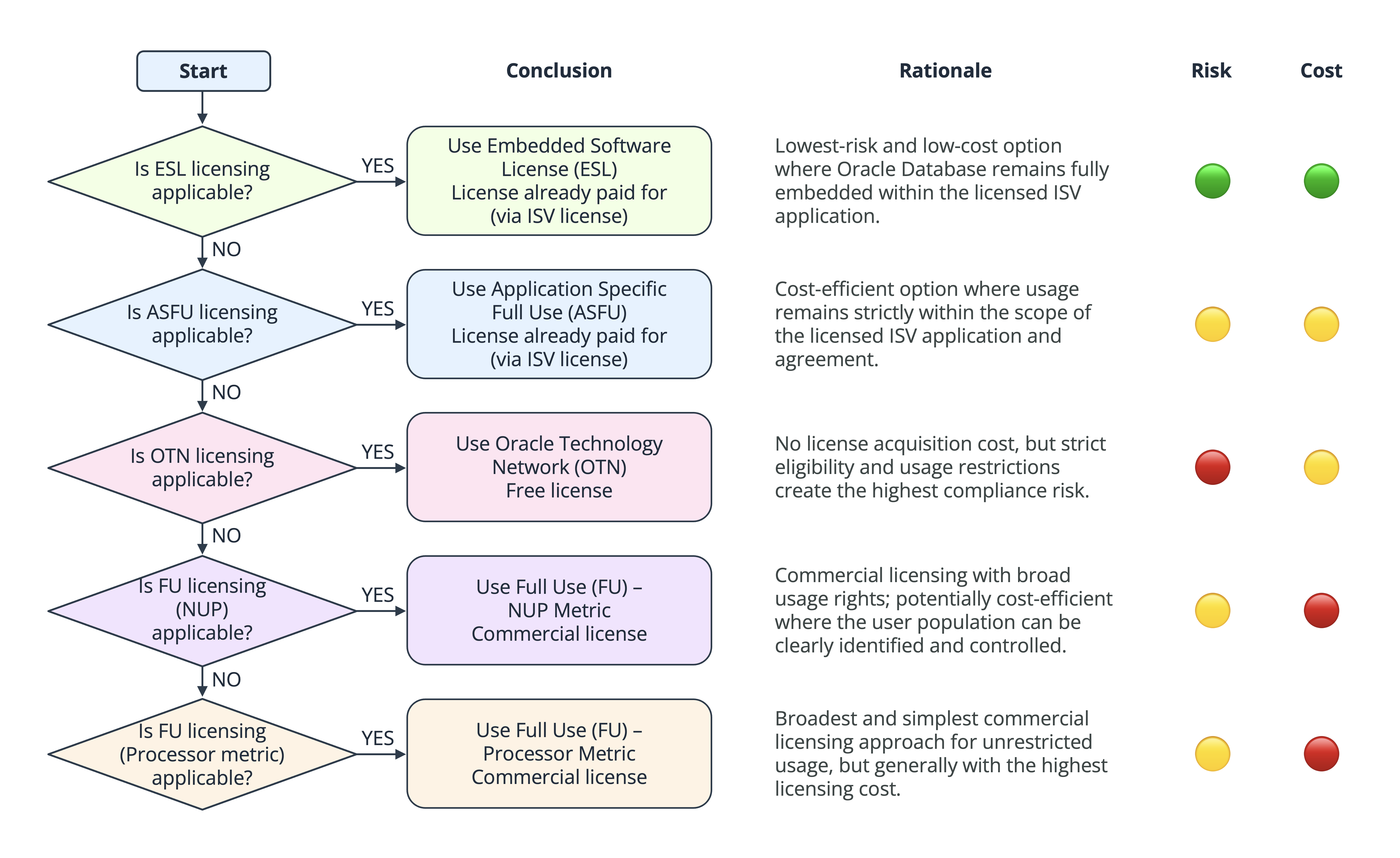
Exhibit 18: Licensing Model Selection: ESL, ASFU, OTN, FU NUP, FU Processor
4.3 Checklist – Qualifying for ESL Licensing
An environment may qualify for ESL licensing if the ISV agreement includes the required Oracle Database license and the Database instance remains inaccessible and potentially invisible to the end customer.
Under this model, direct customer access to or modification of Oracle Database is not permitted, and licensing compliance is primarily managed through the Independent Software Vendor (ISV) arrangement. Customers should therefore remain strictly within the authorized application boundaries and avoid direct access to or modification of the embedded Oracle Database.
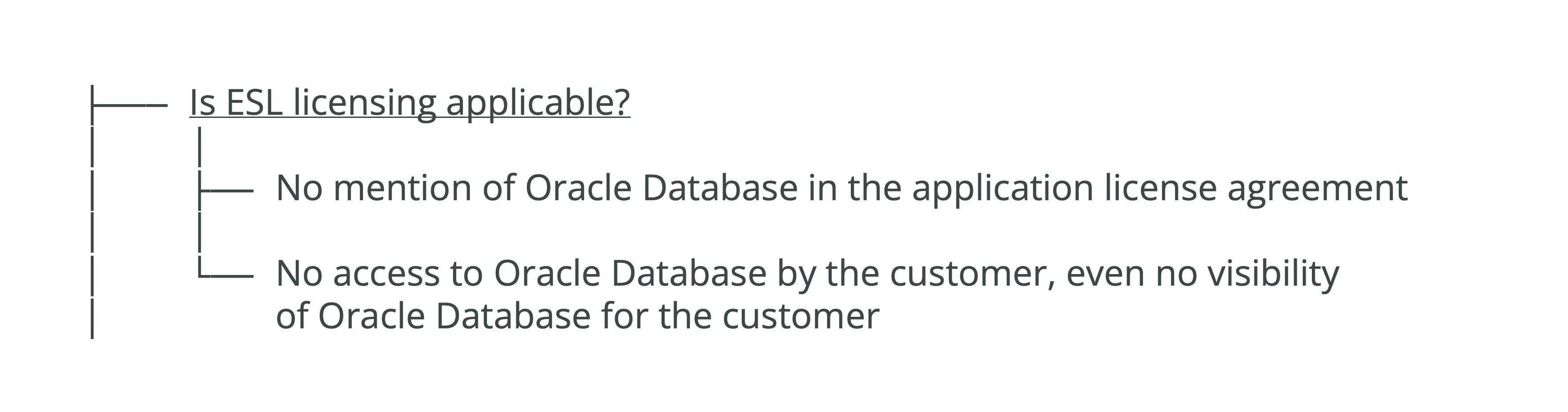
Exhibit 19: Checklist – Embedded Software License (ESL)
4.4 Checklist – Qualifying for ASFU Licensing
An environment may qualify for Application Specific Full Use (ASFU) licensing if specific conditions are met.
For both Enterprise and Standard Editions, these include identifying the application that owns the database, ensuring the application’s purchase agreement explicitly authorizes the use of Oracle Database, and confirming that the deployment adheres to all restrictions imposed by that agreement.
These restrictions may concern, among other things, the permitted deployment (database engine) and usage (Options, and Packs), the permitted environment (machine and virtualization), and the permitted operations (production versus non-production).
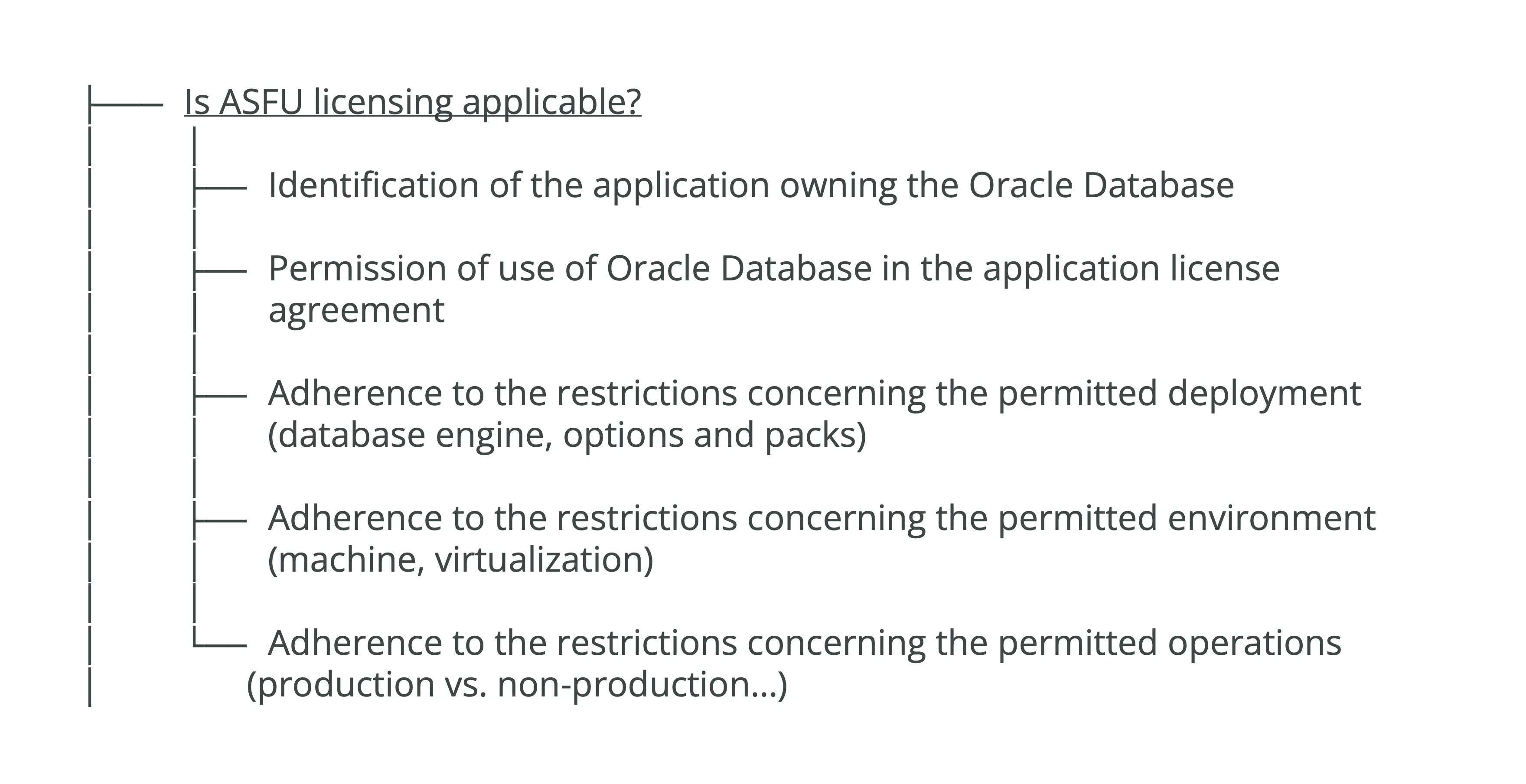
Exhibit 20: Checklist – Application Specific Full Use License (ASFU)
4.5 Checklist – Qualifying for OTN Licensing
This section interprets Oracle licensing under the Oracle Technology Network (OTN) license. The guidelines must be adapted to the specific customer environment and applicable license terms. Customers should obtain specialist advice where the licensing position is uncertain.
An Oracle Database environment may be licensed under OTN at no charge only if its use complies with the applicable restrictions concerning deployment, purpose, users, and operations.
Deployment:
-
Binaries – Oracle Database binaries must be obtained under the applicable OTN license terms (OTN download portal).
-
Deployment – The application must not be deployed for any production, commercial, or revenue-generating purpose.
Environment:
-
Purpose and usage – The environment must be used only for purposes expressly permitted by the applicable OTN terms, including developing, testing, prototyping, and demonstrating the application.
-
Isolation – The environment should be segregated from production and commercial environments to support evidence that its use remains within the permitted OTN purposes.
-
Data – The OTN terms do not establish a general safe harbor for production-derived data in testing. To reduce compliance risk, test data should be static where practicable, and production-derived data should be modified or anonymized and carefully controlled. Automated or continuous production feeds and any feedback into production should be avoided when relying on OTN.
Users:
Operations:
-
Application lifecycle (click effect) – The application must not have been used for data processing, business, commercial, or production purposes, nor for external data processing or by external parties in a manner that falls outside the OTN license grant.
-
Customers should maintain detailed and auditable documentation demonstrating compliance with OTN licensing conditions. The OTN Developer License Terms state that Oracle may audit use of the Programs.
Within these restrictions, OTN remains a no-cost option for controlled non-production Oracle Database environments.
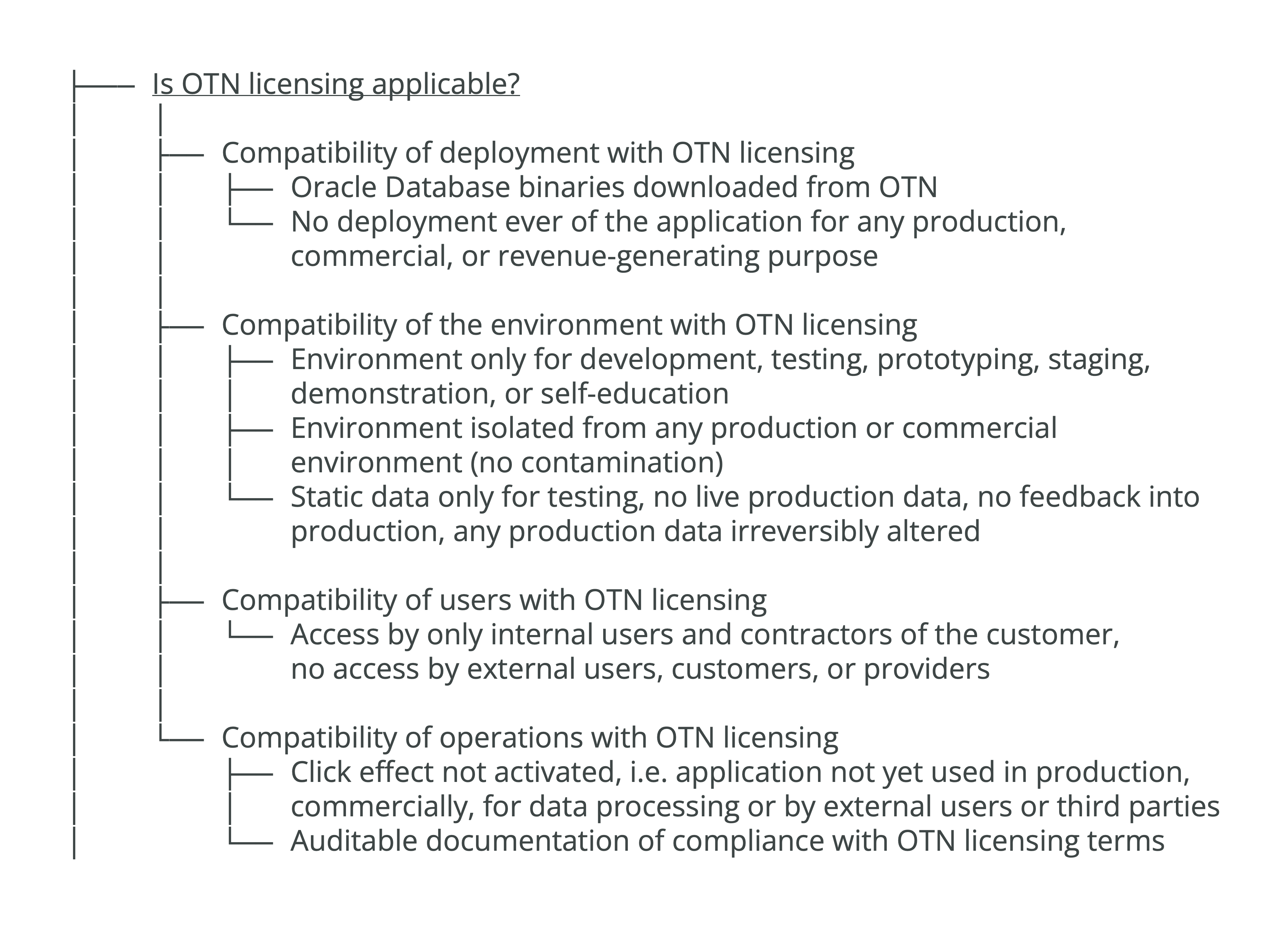
Exhibit 21: Checklist – Oracle Technology Network License (OTN)
4.6 Checklist – Qualifying for Full Use (FU) Licensing
Oracle Database environments may be licensed under Full Use (FU) terms using either the Named User Plus (NUP) or Processor metric. Determining the correct licensing metric depends on several factors, including the architecture of the deployment and the edition of Oracle Database being used – Enterprise Edition or Standard Edition.
Before any license calculation, the environment must be documented well enough to meet the requirements of the applicable Full Use metric. These requirements differ between the Named User Plus (NUP) and Processor metrics and are listed in the table below.
|
User Identification
|
All users and all automated or human-operated devices must be identifiable. Human users must be uniquely identified.
|
Same requirement as EE applies.
|
NUP
|
|
Application Identification
|
All applications (systems/interfaces) must be documented to ensure indirect and multiplexed users/devices are identifiable.
|
Same requirement as EE applies.
|
NUP
|
|
Physical Layer
|
The full underlying infrastructure (processors, cores, processor types) must be known and documented.
|
Same requirement as EE applies.
|
NUP, Processor
|
|
OPCF (Core Factor)
|
Oracle Processor Core Factor must be known for each processor. If unknown, assume 1.0 (100%).
|
Not required.
|
Processor (EE only)
|
|
Minimum User Count
|
Minimum = 25 × number of processor licenses ( after applying OPCF).
|
SE/SE1: Minimum = 5 Named User Plus. SE2: Minimum = 10 Named User Plus per server.
|
NUP
|
|
Processor Count
|
All processors and cores must be listed and countable.
|
Same requirement applies.
|
Processor
|
Exhibit 22: Foundational Requirements for Full Use Licensing
The foundational requirements above establish the licensing baseline before either the NUP or Processor metric is assessed. The relevant users, applications, interfaces, devices, and physical infrastructure must be identified and documented with sufficient precision to support the selected metric and the resulting license calculation.
Incomplete or inaccurate input data may lead to an incorrect licensing requirement. The supporting documentation should also be sufficiently detailed to allow the licensing assumptions, metric selection, and resulting quantities to be independently verified.
This baseline also provides a consistent basis for comparing the NUP and Processor metrics and documenting why one metric is selected.
For environments that may qualify for the NUP metric, the decision tree below outlines the steps required to determine eligibility and the applicable licensing requirement.
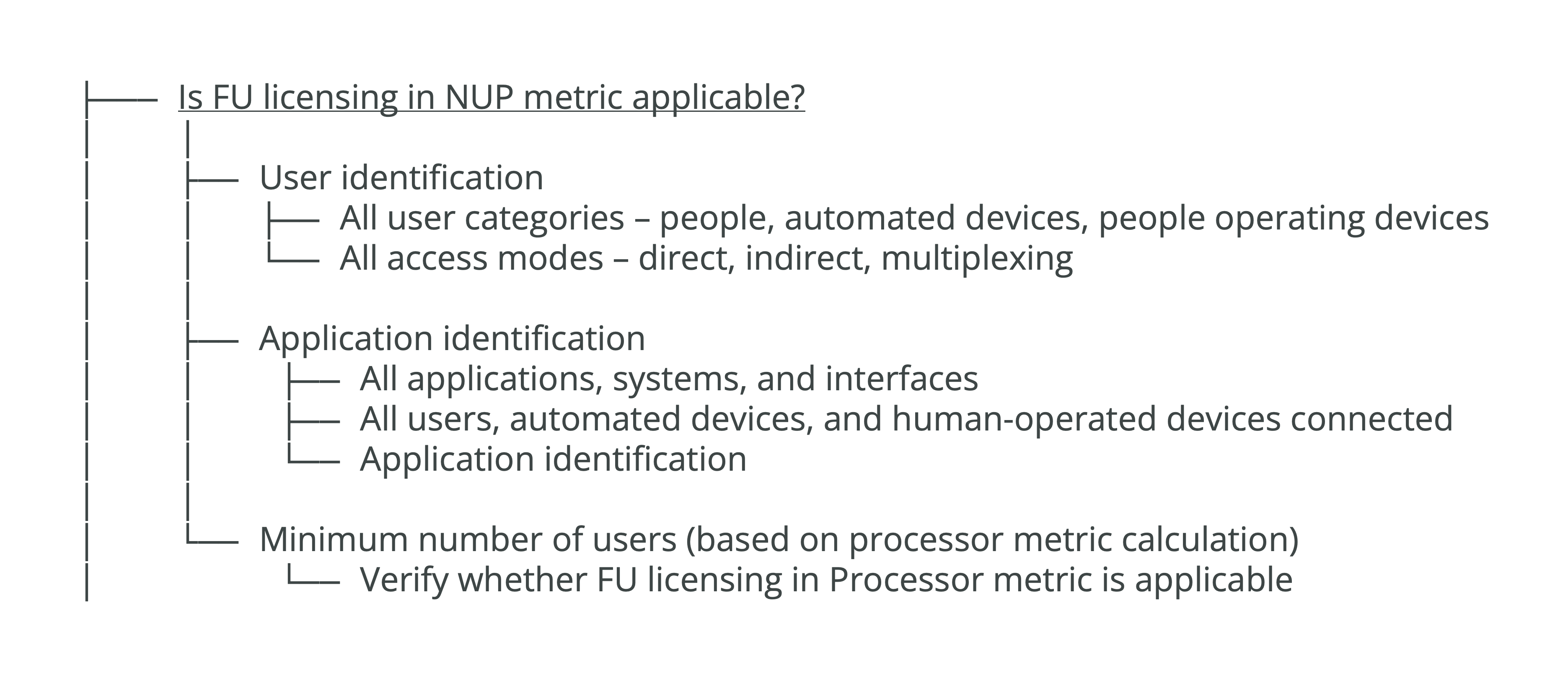
Exhibit 23: Checklist – Full Use License in NUP Metric
Similarly, the following decision tree guides the assessment of environments intended to be licensed under the Processor metric.
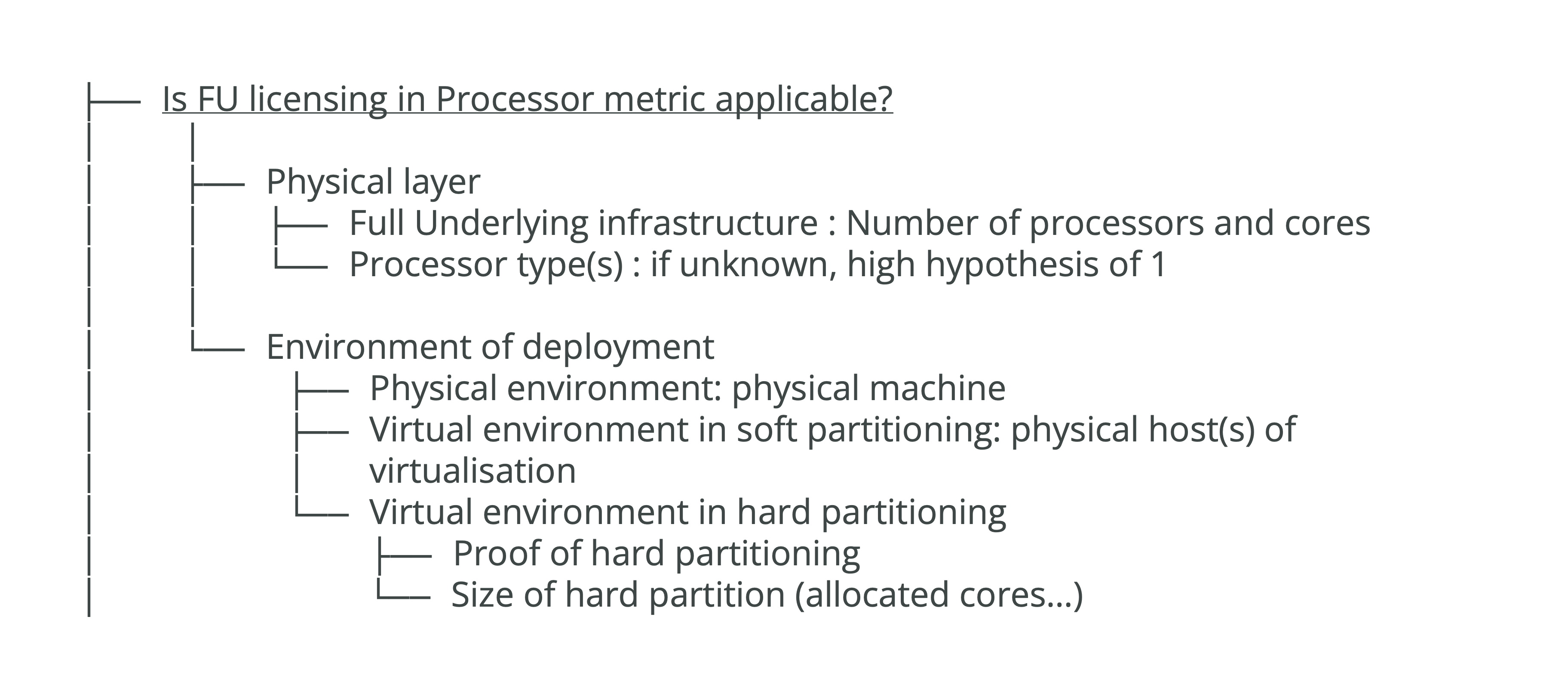
Exhibit 24: Checklist – Full Use License in Processor Metric
Both decision trees are provided in the downloadable source materials.
4.7 Final Decision Based on Risk and Costs
The final decision among the qualifying licensing models is based on their respective risk and cost profiles. Among the authorized licensing models, the choice is generally made in the following order:
If ESL is permitted,
then ESL is selected, as it combines ⬤ low risk with ⬤ low or no cost.
If ESL is not permitted,
then ASFU is selected, as it presents a ⬤ medium risk and ⬤ medium cost profile.
If ASFU is not permitted,
then OTN is selected, as it combines ⬤ high risk with ⬤ medium overall cost.
If OTN is not permitted,
then FU is selected, as it combines ⬤ medium risk with ⬤ high cost.
Any deviation from this order – for instance, selecting FU instead of OTN because the environment will soon be moved into production – should be justified.
4.8 Comprehensive Checklist for Licensing Models – Your Decision Tool
The following comprehensive checklist is used to assess Oracle Database licensing models across different deployment and usage scenarios. It outlines key compliance requirements for Embedded Software License (ESL), Application Specific Full Use (ASFU), Oracle Technology Network (OTN) licensing, and Full Use (FU) licenses measured under the Processor and NUP metrics.
The checklist is organized into five key compliance dimensions: Licensing Agreement, Technical Configuration, Environment, Deployment, and Operations. These five dimensions cover the conditions that determine which licensing model can apply to a given environment.
Licensing Agreement – The contractual basis under which Oracle Database may be used and the rights and restrictions defined by the applicable agreement.
Technical Configuration – Oracle Database deployment itself, including the edition, version, options, packs, hardware, and virtualization environment.
Environment – the actual purpose of the system, such as development, testing, staging, training, production, or other commercial use.
Deployment – whether the Oracle Database installation and the hosting infrastructure comply with the restrictions of the selected licensing model.
Operations – how the environment is actually used in practice, including users, data, production connectivity, external access, and ongoing compliance controls.
Concerning the Licensing Agreement
|
There is a licensing agreement for a main application (software) from an ISV, Independent Software Vendor, covering the customer’s use of that primary application…
|
✓ Yes
|
✓ Yes
|
✕ No
|
✕ No
|
✕ No
|
|
… and that agreement explicitly authorizes Oracle Database usage as part of the licensed primary application.
|
✕ No – Oracle Database not mentioned in ISV agreement
|
✓ Yes
|
N/A
|
N/A
|
N/A
|
|
Customers have purchased Oracle Database licenses directly from Oracle or via an Oracle license reseller, for the reference environment with the Oracle Database deployment.
|
✕ No – Oracle licenses are not purchased as standalone licenses by the customer
|
✕ No – Oracle licenses are not purchased as standalone licenses by the customer
|
✕ No – OTN is not a license purchase agreement
|
✓ Yes – License purchase
|
✓ Yes – License purchase
|
|
Customers have agreed to the OTN License Terms (via the Oracle website) – before software use.
|
N/A
|
N/A
|
✓ Yes – OTN License Terms mandatory (before use)
|
N/A
|
N/A
|
Exhibit 25: Checklist for Licensing Models – Licensing Agreement
Concerning the Technical Configuration
|
The application owning the database is identified. The owning application and its role in the non-production environment are documented.
|
✓ Yes
|
✓ Yes
|
✓ Yes
|
N/A
|
✓ Yes – required to identify users
|
|
Oracle Database deployment is identified (edition, version, options, packs). Record with LMS scripts the installed edition, version, options, and packs used.
|
✕ No – Oracle Database is not accessible to customer
|
✓ Yes
|
✓ Yes
|
✓ Yes
|
✓ Yes
|
|
Oracle Database technical environment is inventoried (processors, cores, virtualization including VMware, UNIX / IBM LPAR, etc.). Establishes the hardware and virtualization scope relevant to the selected licensing metric.
|
✕ No – Oracle Database is not accessible to customer
|
✓ Yes
|
N/A
|
✓ Yes
|
✓ Yes
|
|
Oracle Database binaries have been obtained under the applicable OTN license terms. That is the most overlooked imperative.
|
✕ No – Oracle Database binaries integrated by ISV
|
N/A – Oracle Database binaries are downloaded from any Oracle source
|
✓ Yes – the Programs must be obtained under the applicable OTN license terms (OTN download)
|
N/A – binaries downloaded from any Oracle source
|
N/A – binaries downloaded from any Oracle source
|
Exhibit 26: Checklist for Licensing Models – Technical Configuration
Concerning the Environment
|
The application is deployed for production, commercial, or revenue-generating purpose. Includes customer-facing, commercial, and revenue-generating workloads.
|
✓ Yes / ✕ No – Depending on restrictions imposed by the ISV agreement
|
✓ Yes / ✕ No – Depending on restrictions imposed by the ISV agreement
|
✕ No – production prohibited under OTN. Commercial or revenue-generating use is not permitted by OTN.
|
N/A – FU covers all environments
|
N/A – FU covers all environments
|
|
The environment is used only for developing, testing, prototyping, or demonstrating the application, as permitted by the applicable OTN terms. The permitted purpose should remain non-production throughout the use of the environment.
|
✓ Yes / ✕ No – Depending on restrictions imposed by the ISV agreement
|
✓ Yes / ✕ No – Depending on restrictions imposed by the ISV agreement
|
✓ Yes – provided the use remains OTN eligible. Beware: OTN eligibility lost if application already deployed in production ("click effect")
|
N/A – FU covers all environments
|
N/A – FU covers all environments
|
|
The environment is isolated from any production or commercial environment (no contamination). The environment should not operate as a dependency of a production or commercial service.
|
✓ Yes / ✕ No – Depending on restrictions imposed by the ISV agreement
|
✓ Yes / ✕ No – Depending on restrictions imposed by the ISV agreement
|
✓ Yes – separation supports the non-production use boundary.
|
N/A – FU covers all environments
|
N/A – FU covers all environments
|
Exhibit 27: Checklist for Licensing Models – Environment
Concerning the Deployment
|
The Oracle Database deployment complies with all restrictions imposed by the licensing agreement on the application, including restrictions on the database engine (edition, version) and the options and packs.
|
N/A
|
✓ Yes
|
Applicable OTN terms must be checked for each Oracle Program. However, any edition, Option and Pack is permitted under OTN.
|
✓ Yes – Depending on the licenses purchased
|
✓ Yes – Depending on the licenses purchased
|
|
The technical environment hosting the deployment complies with all restrictions imposed by the licensing agreement, including restrictions on the maximum environment size, operating system, and virtualization type.
|
N/A
|
✓ Yes
|
No Processor/NUP hardware metric applies under this OTN license, but the actual use and deployment must remain within the license restrictions, as foreseen by the OTN agreement
|
✓ Yes – Depending on the licenses purchased
|
✓ Yes – Depending on the licenses purchased
|
Exhibit 28: Checklist for Licensing Models – Deployment
Concerning Operations
|
The application may not have ever been used for production use, commercial activities, external data processing, or accessed by external parties (click effect).
|
✓ Yes / ✕ No – Depending on restrictions imposed by the ISV agreement
|
✓ Yes / ✕ No – Depending on restrictions imposed by the ISV agreement
|
✓ Yes
|
N/A
|
N/A
|
|
Production-derived data used for testing is controlled and documented; automated or continuous production feeds and feedback into production are avoided when relying on OTN.
|
✓ Yes / ✕ No – Depending on restrictions imposed by the ISV agreement
|
✓ Yes / ✕ No – Depending on restrictions imposed by the ISV agreement
|
✓ Yes
|
N/A – FU covers all environments
|
N/A – FU covers all environments
|
|
Only internal users and authorized contractors of the customer may access the environment. No external users, customers, or providers are permitted.
|
✓ Yes / ✕ No – Depending on restrictions imposed by the ISV agreement
|
✓ Yes / ✕ No – Depending on restrictions imposed by the ISV agreement
|
✓ Yes
|
N/A
|
N/A
|
|
Customer maintains detailed and auditable documentation demonstrating compliance with OTN licensing conditions.
|
✓ Yes / ✕ No – Depending on restrictions imposed by the ISV agreement
|
✓ Yes / ✕ No – Depending on restrictions imposed by the ISV agreement
|
✓ Yes
|
N/A
|
N/A
|
Exhibit 29: Checklist for Licensing Models – Operations
5 Optimizing the Costs of Oracle Database Licensing: Three Scenarios
Optimizing Oracle Database licensing costs requires a structured analysis of environments (Oracle deployments and infrastructure), applicable licensing metrics, infrastructure architecture, and available contractual mechanisms.
This section introduces three representative deployment scenarios – Production, Non-Production Test, and Non-Production Development – used to show how Oracle license consumption and associated costs vary with usage context, architecture, and the selected licensing model, and where licensing costs can be optimized.
⇩ All referenced Oracle documentation is available in the downloadable source materials [➜ Chapter 6 – Sources and Scenario Calculation Files to Download].
5.1 Scenario Framework
This section establishes the common settings for the three scenarios, so that they are comparable: the scenario structure, the Oracle deployment, and applicable pricing.
5.1.1 Scenario Design
The three scenarios use realistic infrastructure and user populations so that the licensing results can be compared directly.
Scenario 1 Production represents a production environment deployed on dedicated physical infrastructure. It serves as the baseline: standard Oracle licensing, no contractual relief, highest exposure.
Scenario 2 Non-Production Test represents a non-production test environment deployed on a virtualized VMware infrastructure. This is a controlled non-production use case with a limited number of users, where contractual mechanisms such as a Cluster with Double Isolation (CWDI) agreement and an Active Core (AC) agreement can be applied to restrict the licensable footprint and reduce overall license consumption.
Scenario 3 Non-Production Development represents a non-production development environment, also hosted on a virtualized VMware platform. While technically like the test environment, it is treated as a distinct scenario due to its different purpose. When governed by appropriate contractual safeguards (CWDI or AC), it typically offers the greatest potential for licensing optimization.
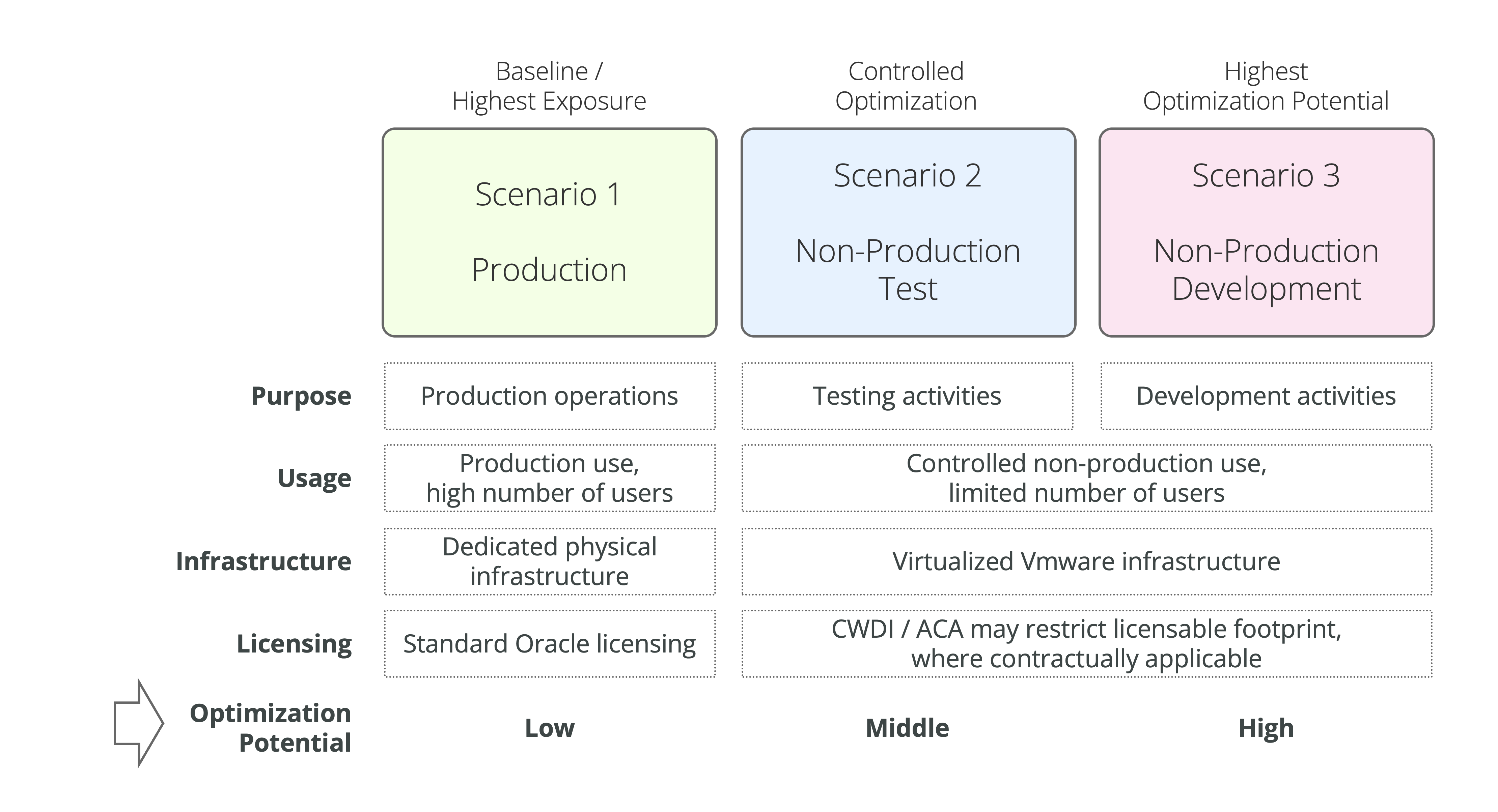
Exhibit 30: Overview of Scenarios
5.1.2 Scenario Comparability
For comparability, the scenarios use the same Oracle Database deployments, support level, and pricing assumptions.
Oracle Database Deployments
The Oracle Database deployment used in all three scenarios is Oracle Database Enterprise Edition with two Enterprise Options – Multitenant and Partitioning – and two Management Packs – Diagnostics Pack and Tuning Pack.
License Support Level (Maintenance)
All Oracle licenses are assumed to be covered by active maintenance, i.e. Oracle Software Update License & Support. The scenarios intentionally combine physical infrastructure for production workloads with virtualized environments for test and development workloads, reflecting common enterprise infrastructure architectures.
Oracle Agreements
Where applicable, three Oracle licensing frameworks are considered for comparison: standard Oracle licensing, a Cluster with Double Isolation (CWDI) agreement, and an Active Core (AC) agreement.
Broad CWDI/AC agreement assumptions are used here, recognizing that the actual rights and obligations may differ by customer and by executed agreement. The CWDI/AC agreements assumed here affect the calculation of the minimum number of users required under NUP licensing.
⚠ Check your organization’s Oracle agreement to understand the restrictions and applicability to the Processor metric and/or NUP minimum-user requirements.
License Unit Price
The pricing applied in the scenario assumes an 80% discount on Oracle’s public list prices. Realistic discount (depending on annual volumes) range between 50% and 90%.
The discounted unit prices used in the scenarios, including one year of support, are shown rounded as € 19,742 per Processor license and € 395 per Named User Plus (NUP) license.
In Processor metric:
|
License:
|
|
Oracle Database Enterprise Edition
|
$ 47,500
|
€ 43,182
|
€ 8,636
|
|
Multitenant Option
|
$ 17,500
|
€ 15,909
|
€ 3,182
|
|
Partitioning Option
|
$ 11,500
|
€ 10,455
|
€ 2,091
|
|
Diagnostics Pack
|
$ 7,500
|
€ 6,818
|
€ 1,364
|
|
Tuning Pack
|
$ 5,000
|
€ 4,545
|
€ 909
|
|
TOTAL License Price
|
$ 89,000
|
€ 80,909
|
€ 16,182
|
|
1-Year Support:
|
|
Software Update License & Support (22% of License)
|
$ 19,580
|
€ 17,800
|
€ 3,560
|
|
Total
|
$ 108,580
|
€ 98,709
|
€ 19,742
|
Exhibit 31: Unit Price (80% Discount) – Processor Metric
The Processor Metric (table above) determines the license consumption based on the processing capacity of the underlying hardware. The Named User Plus (NUP) metric (next table) licenses the identified users accessing the Oracle Database, subject to minimum licensing requirements (these minimums are calculated based on number of Processor licenses). So in order to license in NUP, the Processor licenses must be calculated too.
In NUP metric:
|
License:
|
|
Oracle Database Enterprise Edition
|
$ 950
|
€ 864
|
€ 173
|
|
Multitenant Option
|
$ 350
|
€ 318
|
€ 64
|
|
Partitioning Option
|
$ 230
|
€ 209
|
€ 42
|
|
Diagnostics Pack
|
$ 150
|
€ 136
|
€ 27
|
|
Tuning Pack
|
$ 100
|
€ 91
|
€ 18
|
|
TOTAL License Price
|
$ 1,780
|
€ 1,618
|
€ 324
|
|
1-Year Support:
|
|
Software Update License & Support (22% of License)
|
$ 392
|
€ 356
|
€ 71
|
|
Total
|
$ 2,172
|
€ 1,974
|
€ 395
|
Exhibit 32: Unit Price (80% Discount) – NUP Metric
Note: The EUR/USD exchange rate used in this pricing calculation reflects a cautious internal exchange rate applied by Oracle in its global operations.
5.1.3 Analysis Rationale
For each scenario, Oracle licensing exposure is evaluated by comparing the licensing models:
-
Full Use in Processor metric
-
Full Use in Named User Plus (NUP) metric
-
Oracle Technology Network (OTN), where applicable
The licensing models ESL and ASFU are not included in these cost calculations as their applicability should be assessed before considering OTN or Full Use licensing (refer to the provided checklists ➜ Chapter 4). Where ESL or ASFU applies, it will usually represent the preferred licensing basis because the Oracle Database license is already included in the ISV arrangement (no added costs) and the licensing risks of these models are low.
5.2 Pre-Analysis – Licensing Mode
Before performing any license calculations, it is helpful to define the licensable scope (sizing) and the applicable licensing metric for each scenario.
The table below provides this pre-analysis framework by mapping each contractual framework (Oracle agreement) to its corresponding licensing boundaries for physical and virtualized deployments.
|
Environment:
|
|
Environment Type
|
Production
|
Non-Production
|
|
Primary Use
|
Production
|
Test
|
Development
|
|
Physical vs. Virtual
|
Physical
|
Virtual (VMware)
|
|
Oracle Agreements:
|
|
Standard Oracle Licensing
|
✓ Yes
|
✓ Yes
|
✓ Yes
|
|
Cluster with Double Isolation (CWDI) agreement
|
N/A (only for virtualization)
|
✓ Yes
|
✓ Yes
|
|
Active Core agreement (AC)
|
N/A (only for virtualization)
|
✓ Yes
|
✓ Yes
|
|
Oracle Technology Network (OTN)
|
N/A (not for production)
|
⚠ Conditional
|
⚠ Conditional
|
Exhibit 33: Scenario Environment and Contractual Framework
Three contractual frameworks are considered: Standard Oracle licensing, Cluster with Double Isolation (CWDI) agreement, and Active Core (AC) agreement. Each framework defines a different licensable perimeter, ranging from broad infrastructure-level licensing under standard terms to more restricted scopes under CWDI and Active Core, directly impacting the application of Processor and Named User Plus metrics.
The analysis distinguishes between physical server deployments and VMware virtual machine deployments, as licensing calculations differ between these models. Physical deployments are licensed at the server level, while virtualized deployments may be licensed at the vCenter, cluster, or virtual machine level, depending on the agreement in place. Each scenario in the following sections references one of the labeled licensing modes shown in the table.
POSE refers to a Physical Operating System Environment, while VOSE refers to a Virtual Operating System Environment. Accordingly, the licensing modes distinguish between:
-
POSE on a physical server (licensing the physical server itself),
-
POSE on vCenter (licensing the relevant physical ESX hosts within the vCenter),
-
POSE on a cluster (licensing the relevant physical ESX hosts within the cluster),
-
and VOSE on an individual virtual machine (licensing the VM).
This terminology is used consistently in the scenarios and in the Excel workbook. Where applicable, Oracle Technology Network (OTN) licensing is identified separately as a non-commercial model limited to specific development or test use cases.
The applicable Oracle licensing mode is determined by both the contractual framework in place and the deployment environment.
The contractual framework defines the applicable licensing scope, as summarized below.
|
Standard Oracle Licensing
|
License all physical cores of all ESX hosts in the vCenter (unlimited virtualization)
|
|
Cluster with Double Isolation (CWDI) agreement
|
License all physical cores of all ESX hosts in the cluster (unlimited virtualization)
|
|
Active Core Agreement
|
License either the vCPU (VMware threads) of all VMs hosting Oracle Database or all physical cores of all ESX hosts in the cluster
|
Exhibit 34: Contractual Framework and Licensing Scope
For physical server environments, CWDI and Active Core agreements do not change the applicable licensing mode.
For Physical Environment:
|
Full Use in Processor Metric
|
1A. POSE on Physical Server
|
N/A
|
N/A
|
N/A
|
|
Full Use in NUP Metric
|
1B. User on Physical Server
|
N/A
|
N/A
|
N/A
|
|
OTN Licensing
|
1C. OTN (free), if applicable
|
N/A
|
N/A
|
N/A
|
Exhibit 35: Licensing Modes for Physical Environment
For virtual environments, the contractual framework determines whether the licensing scope is based on the vCenter, the cluster, or the individual virtual machine. The contract changes the technical footprint taken into account in the calculation of the license consumption. An AC agreement provides furthermore a flexibility of licensing (Cluster vs. VM only), which permits to even more optimize consumption of licenses.
For Virtual Environment:
|
Full Use in Processor Metric
|
2A. POSE on vCenter
|
2B. POSE on cluster
|
2C. VOSE on VM
|
2D. POSE on cluster
|
|
Full Use in NUP Metric
|
2E. User on VM (Minimum on vCenter)
|
2F. User on VM (Minimum on cluster)
|
2G. User on VM (Minimum on VM)
|
2H. User on VM (Minimum on cluster)
|
|
OTN Licensing
|
2I. OTN (free), if applicable
|
Exhibit 36: Licensing Modes for Virtual Environment
The scenario references (1A, 1B, etc.) correspond to the licensing modes used in the Microsoft Excel file (download ➜ Chapter 6).
5.3 Scenario 1: Production Environment
This section analyzes the Production scenario from environment definition through licensing evaluation and recommendation.
5.3.1 Environment
This scenario models a production environment with a large user population, hosted on a dual-processor physical server.
The analysis compares the two primary Oracle licensing options – Full Use in Processor and Named User Plus (NUP) metrics – to determine the most cost-efficient and compliant licensing model. OTN Licensing does not qualify (production).
|
Environment Type
|
Production
|
|
Primary Use
|
Production
|
|
Physical vs. Virtual
|
Physical
|
Exhibit 37: Scenario 1 Production – Environment
5.3.2 Scenario Parameters
The physical environment is based on an HP ProLiant DL560 Gen10 server equipped with two Intel Xeon Gold 6152 @ 2.10 GHz processors. Each processor contains 22 cores, totaling 44 physical cores. According to Oracle’s Processor Core Factor (OPCF) Table, the core factor for this CPU type is 0.50. The environment supports 12,000 users. The scenario applies to standard Oracle licensing, requiring all physical cores of the server to be licensed.
Parameters in green-highlighted cells in the Excel file can be modified and adapted to reflect client-specific inputs. Calculations and outputs are automatically generated through embedded Excel formulas. Refer to the Excel file to download.
|
Physical Layer:
|
|
Physical Server Name
|
HP ProLiant DL560 Gen10
|
|
|
Processor Type
|
Intel Xeon Gold 6152 @ 2.10GHz (22 cores, 44 threads)
|
|
|
Oracle Processor Core Factor (OPCF)
|
0.50
|
A
|
|
Number of Processors for the Server
|
2
|
B
|
|
Number of Physical Cores per Processor
|
22
|
C
|
|
Number of Physical Cores for the Server
|
44
|
D=BxC
|
|
Users:
|
|
Number of Users
|
12,000
|
E
|
|
Access
|
Access to all DB instances on the physical server
|
|
Exhibit 38: Scenario 1 Production – Scenario Parameters
The licensing framework considers only Standard Oracle Licensing, as neither a CWDI nor an AC agreement applies to deployments in a physical environment.
|
Agreement
|
Standard Oracle Licensing
|
|
To be licensed
|
License all physical cores of the physical server
|
Exhibit 39: Scenario 1 Production – Licensing Framework
5.3.3 Licensing Evaluation
All totals are calculated using unrounded values. Refer to the Excel file for calculation details.
Processor Metric
Under the Processor metric, Oracle requires all physical (non-hyperthreaded) cores on the server to be licensed. Applying the Oracle Processor Core Factor:
Cores to be Licensed = 44 cores × 0.50 OPCF = 22 Processor Licenses
Unit Price (80% Discount) per Processor License = € 19,742
Total Cost = 22 Processor Licenses × € 19,742 = € 434,320
The breakdown includes Oracle Database Enterprise Edition and key options (Multitenant, Partitioning, Diagnostics, Tuning), as well as one year of support.
NUP Metric
The Named User Plus (NUP) metric requires licensing either the actual number of users or the minimum user requirement, whichever is greater:
Minimum NUP Users = 25 × 22 Processor licenses = 550 Users
Actual Users = 12,000 ➜ Above minimum
Number of Users to License = 12,000 Users
Unit Price per User (license + one year of maintenance) = € 394.84
Total Cost = 12,000 Users × € 394.84 = € 4,738,036
Due to the large number of users, NUP licensing is cost-inefficient in this case.
OTN Licensing
OTN licensing is explicitly not permitted for production use under Oracle’s OTN licensing terms and is therefore not applicable.
5.3.4 Recommendation
For this production scenario, the Processor Metric is the most cost-effective and compliant licensing model. The Processor Metric costs € 434,320 versus € 4,738,036 under the Named User Plus metric, corresponding to a cost reduction of € 4,303,716 (91%).
|
Recommended Licensing Model
|
Processor Metric
|
|
|
Total Costs of Oracle Database License (€)
|
€ 434,320
|
I
|
|
Cost Reduction (€)
|
€ 4,303,716
|
O=ABS(N-I)
|
|
Cost Reduction (%)
|
91%
|
P=O/MAX(I;N)
|
Exhibit 40: Scenario 1 Production – Recommendation
For high-volume user environments, the Processor Metric offers substantial savings.
5.4 Scenario 2: Test Environment
This section analyzes the Test scenario from environment definition through licensing evaluation and recommendation. Different licensing are applied: standard Oracle Licensing and licensing modifying Oracle agreements (Cluster with Double Isolation, Active Core). OTN Licensing will be considered.
5.4.1 Environment
This scenario models a non-production test environment deployed on a VMware virtual infrastructure. The test setup includes Oracle Database instances distributed across multiple virtual machines (VMs).
The licensing analysis compares the following Oracle licensing models, depending on the licensing agreement with Oracle:
-
Standard Oracle Licensing (vCenter-wide): License all physical cores of all ESX hosts in the vCenter (unlimited virtualization)
-
Cluster with Double Isolation (CWDI): License all physical cores of all ESX hosts in the cluster (unlimited virtualization)
-
Active Core (AC) agreement (VOSE or POSE licensing modes): License…
-
either the vCPU (VMware threads) of all VMs hosting Oracle Database [Licensing per VOSE, Virtual Operating System Environment],
-
or all physical cores of all ESX hosts in the cluster with unlimited virtualization [Licensing per POSE on the cluster, Physical Operating System Environment]
This environment is intended solely for internal testing by a small user group (70 users). Access is restricted so that only those 70 users may access the environment.
|
Environment Type
|
Non-Production
|
|
Primary Use
|
Test
|
|
Physical vs. Virtual
|
Virtual (VMware)
|
Exhibit 41: Scenario 2 Test – Environment
5.4.2 Scenario Parameters
This environment runs on HP ProLiant XL420 Gen9 servers with Intel Xeon E5-2650 v4 @ 2.20GHz processors. Each server (ESX host) has two processors, each with 12 physical cores, leading to 24 cores per ESX. The VMware cluster includes 12 ESX hosts (288 cluster cores), and the entire vCenter includes 36 ESX hosts (864 cores total).
Oracle licensing depends on how virtualization is isolated. The scenario includes 50 Oracle Database VMs, each configured with 12 vCPUs.
|
Physical Environment:
|
|
ESX
|
HP ProLiant XL420 Gen9
|
|
|
Processor Type
|
Intel Xeon E5-2650 v4 @ 2.20GHz
|
|
|
Oracle Processor Core Factor (OPCF)
|
0.5
|
A
|
|
Number of Processors per ESX
|
2
|
B
|
|
Number of Physical Cores per Processor
|
12
|
C
|
|
Number of Physical Cores per ESX
|
24
|
D=BxC
|
|
Number of ESX Hosts in Cluster
|
12
|
E
|
|
Number of Cores in cluster
|
288
|
F=DxE
|
|
Number of ESX Hosts in vCenter
|
36
|
G
|
|
Number of Physical Cores in vCenter
|
864
|
H=DxG
|
|
Virtual Layer:
|
|
Number of VMs Hosting Oracle Database
|
50
|
I
|
|
vCPU per VM
|
12
|
J
|
|
Users:
|
|
Number of Users for All Oracle Databases
|
70
|
K
|
Exhibit 42: Scenario 2 Test – Scenario Parameters
The licensing framework distinguishes between Standard Oracle Licensing and the Oracle Agreements (Cluster with Double Isolation and Active Core).
|
To be licensed
|
License all physical cores of all ESX hosts in the vCenter (unlimited virtualization)
[Licensing per POSE on the vCenter – Physical Operating System Environment]
|
License all physical cores of all ESX hosts in the cluster (unlimited virtualization)
[Licensing per POSE on the cluster – Physical Operating System Environment]
|
License the vCPU (VMware threads) of all VMs hosting Oracle Database
[Licensing per VOSE – Virtual Operating System Environment]
|
…or all physical cores of all ESX hosts in the cluster (unlimited virtualization)
[Licensing per POSE on the cluster – Physical Operating System Environment]
|
Exhibit 43: Scenario 2 Test – Licensing Framework
5.4.3 Licensing Evaluation
All totals are calculated using unrounded values. Refer to the Excel file for calculation details.
Processor Metric
Standard Oracle Licensing
All 864 cores of all ESX hosts in the vCenter must be licensed.
Licensable Cores = 864
Processor Licenses = 864 × 0.5 = 432
Discounted Unit Price = € 19,742
Total Cost = 432 × € 19,742 = € 8,528,465
CWDI Agreement (Cluster-Based)
Only the 288 physical cores in the isolated cluster are licensed. The cluster must meet the required isolation criteria for the CWDI agreement to apply, including isolation of cores and storage/disks.
Processor Licenses = 288 × 0.5 = 144
Total Cost = € 2,842,822
Active Core – Licensing per VOSE
Licensing is based on the total number of vCPUs across all Oracle VMs: 50 VMs × 12 vCPUs = 600.
Equivalent Processor Licenses = 600 × 0.5 = 300
Total Cost = € 5,922,545
Active Core – Licensing per POSE
Licensing falls back to physical cores in the Oracle cluster (identical to CWDI).
Processor Licenses = 288 × 0.5 = 144
Total Cost = € 2,842,822
Each licensing option includes Oracle Database Enterprise Edition, Multitenant, Partitioning, Diagnostics Pack, Tuning Pack, and one year of support.
NUP Metric
Oracle requires licensing the greater of actual users or the minimum user requirement (25 per processor licensed):
Standard licensing
Minimum NUP Users = 864 cores × 0.5 × 25 = 10,800 users
Actual users = 70 users
➜ 10,800 users to be licensed
Unit price = € 394.84 (rounded: € 395)
Total Cost = € 4,264,233
CWDI/POSE Model
288 cores × 0.5 × 25 = 3,600 users
Actual users = 70 users
➜ 3,600 users to be licensed
Total Cost = € 1,421,411
OTN Licensing
OTN eligibility must be assessed against the applicable OTN terms. In this test scenario, the application is assumed to be already in production; therefore, the OTN Developer License is not applicable.
5.4.4 Recommendation
The NUP Metric offers the most economical commercial licensing strategy, delivering a cost reduction of 50% to 76% compared to the Processor Metric model. A CWDI or AC agreement offers even more savings by reducing the minimum user footprint to the cluster (instead of the vCenter in standard licensing).
The three recommendations are shown in the table below, distinguishing which licensing applies: either standard Oracle licensing, or an Oracle agreement in place reducing the technical footprint.
Recommendation for Standard Oracle Licensing
|
Recommended Licensing Model
|
NUP Metric
|
|
|
Minimum Oracle Database Licensing Cost (€)
|
€ 4,264,233
|
V=MIN(O;T)
|
|
Comparison: Maximum Oracle Database Licensing Cost (€)
|
€ 8,528,465
|
W=MAX(O;T)
|
|
Total Cost Reduction (€)
|
€ 4,264,233
|
X=W-V
|
|
Total Cost Reduction (%)
|
50%
|
Y=X/W
|
Exhibit 44: Scenario 2 Test – Optimized Licensing (Standard Licensing)
Recommendation for Cluster with Double Isolation (CWDI) Licensing
|
Recommended Licensing Model
|
NUP Metric
|
|
|
Minimum Oracle Database Licensing Cost (€)
|
€ 1,421,411
|
V=MIN(O;T)
|
|
Comparison: Maximum Oracle Database Licensing Cost (€)
|
€ 2,842,822
|
W=MAX(O;T)
|
|
Total Cost Reduction (€)
|
€ 1,421,411
|
X=W-V
|
|
Total Cost Reduction (%)
|
50%
|
Y=X/W
|
Exhibit 45: Scenario 2 Test – Optimized Licensing (CWDI)
Recommendation for Active Core (AC) Licensing
|
Recommended Licensing Model
|
NUP Metric
|
|
|
Minimum Oracle Database Licensing Cost (€)
|
€ 1,421,411
|
V=MIN(O1;O2;T)
|
|
Comparison: Maximum Oracle Database Licensing Cost (€)
|
€ 5,922,545
|
W=MAX(O1;O2;T)
|
|
Total Cost Reduction (€)
|
€ 4,501,135
|
X=W-V
|
|
Total Cost Reduction (%)
|
76%
|
Y=X/W
|
Exhibit 46: Scenario 2 Test – Optimized Licensing (Active Core)
For small internal user groups and test workloads on virtualized infrastructure, NUP licensing under CWDI or Active Core (POSE) provides the lowest modeled commercial cost where OTN eligibility is not established.
5.5 Scenario 3: Development Environment
This section analyzes the Development scenario from environment definition through licensing evaluation and recommendation. Different Oracle licensing are considered: standard Oracle Licensing, Cluster with Double Isolation, and Active Core agreement. OTN Licensing will be considered.
5.5.1 Environment
This scenario represents a non-production development environment hosted on VMware virtualized infrastructure. The Oracle Database instances run across 50 virtual machines and are used by a limited number of internal developers. Four licensing options are compared to identify the most cost-effective solution for this development environment:
-
Standard Oracle Licensing (vCenter-wide)
-
Cluster with Double Isolation (CWDI)
-
Active Core (AC) agreement (based on VOSE or POSE)
-
OTN Licensing (free, for eligible non-production use cases)
|
Environment Type
|
Non-Production
|
|
Primary Use
|
Development
|
|
Physical vs. Virtual
|
Virtual (VMware)
|
Exhibit 47: Scenario 3 Development – Environment
5.5.2 Scenario Parameters
The infrastructure is built on HP ProLiant XL420 Gen9 servers with Intel Xeon E5-2650 v4 @ 2.20GHz processors. Each ESX host includes two processors, each with 12 cores, for a total of 24 cores per ESX. The development cluster contains 12 ESX hosts, totaling 288 physical cores, while the vCenter includes 36 ESX hosts with 864 cores.
There are 50 VMs, each allocated 12 vCPUs, with 70 internal users working with Oracle Database instances. Access is restricted so that only those 70 users may access the environment.
|
Physical Environment:
|
|
ESX
|
HP ProLiant XL420 Gen9
|
|
|
Processor Type
|
Intel Xeon E5-2650 v4 @ 2.20GHz
|
|
|
Oracle Processor Core Factor (OPCF)
|
0.5
|
A
|
|
Number of Processors per ESX
|
2
|
B
|
|
Number of Physical Cores per Processor
|
12
|
C
|
|
Number of Physical Cores per ESX
|
24
|
D=BxC
|
|
Number of ESX Hosts in Cluster
|
12
|
E
|
|
Number of Cores in cluster
|
288
|
F=DxE
|
|
Number of ESX Hosts in vCenter
|
36
|
G
|
|
Number of Physical Cores in vCenter
|
864
|
H=DxG
|
|
Virtual Layer:
|
|
Number of VMs Hosting Oracle Database
|
50
|
I
|
|
vCPU per VM
|
12
|
J
|
|
Users:
|
|
Number of Users for All Oracle Databases
|
70
|
K
|
Exhibit 48: Scenario 3 Development – Scenario Parameters
The licensing framework distinguishes between Standard Oracle Licensing, the Cluster with Double Isolation (CWDI) agreement, and the Active Core (AC) agreement.
|
To be licensed
|
License all physical cores of all ESX hosts in the vCenter (unlimited virtualization)
[Licensing per POSE on the vCenter – Physical Operating System Environment]
|
License all physical cores of all ESX hosts in the cluster (unlimited virtualization)
[Licensing per POSE on the cluster – Physical Operating System Environment]
|
License the vCPU (VMware threads) of all VMs hosting Oracle Database
[Licensing per VOSE – Virtual Operating System Environment]
|
…or all physical cores of all ESX hosts in the cluster (unlimited virtualization)
[Licensing per POSE on the cluster – Physical Operating System Environment]
|
Exhibit 49: Scenario 3 Development – Licensing Framework
5.5.3 Licensing Evaluation
All totals are calculated using unrounded values. Refer to the Excel file for calculation details.
Processor Metric
Option 1: Standard Oracle Licensing
All 864 physical cores in the vCenter must be licensed.
Licensable Cores = 864
Processor Licenses = 864 × 0.5 = 432
Discounted Unit Price = € 19,742
Total Cost = 432 × € 19,742 = € 8,528,465
Option 2: CWDI Agreement (Cluster-Based)
Only the 288 physical cores in the isolated development cluster must be licensed.
Processor Licenses = 288 × 0.5 = 144
Total Cost = € 2,842,822
Option 3: Active Core – Licensing per VOSE
Licensing is based on the total number of vCPUs across all Oracle VMs: 50 VMs × 12 vCPUs = 600.
Equivalent Processor Licenses=600 × 0.5 = 300
Total Cost = € 5,922,545
Option 4: Active Core – Licensing per POSE
Licensing falls back to physical cores in the Oracle cluster (identical to CWDI).
Processor Licenses = 144
Total Cost = € 2,842,822
Each licensing option includes Oracle Database Enterprise Edition, Multitenant, Partitioning, Diagnostics Pack, Tuning Pack, and one year of support.
NUP Metric
Oracle requires licensing the greater of actual users or the minimum user requirement (25 per processor licensed):
Option 1: Standard Licensing
Minimum NUP Users = 864 cores × 0.5 × 25 = 10,800 users
Actual users = 70
➜ 10,800 users to be licensed
Unit price = € 394.84
Total Cost = € 4,264,233
Option 2: CWDI/POSE Model
Minimum NUP Users = 288 cores × 0.5 × 25 = 3,600 users
Actual users = 70 users
➜ 3,600 users to be licensed
Total Cost = € 1,421,411
OTN Licensing
OTN licensing is modeled at € 0 for this development scenario only if all applicable OTN eligibility conditions are satisfied.
5.5.4 Recommendation
OTN Licensing (if applicable) is the lowest-cost modeled option in this development scenario, reducing the modeled license cost to € 0 when all OTN eligibility conditions described in this publication are satisfied. Three recommendations depending on the applicable licensing (tables below).
Recommendation for Standard Oracle Licensing
|
Recommended Licensing Model
|
OTN Licensing (if applicable)
|
|
|
Minimum Oracle Database Licensing Cost (€)
|
€ 0
|
V=MIN(O;T;U)
|
|
Comparison: Maximum Oracle Database Licensing Cost (€)
|
€ 8,528,465
|
W=MAX(O;T;U)
|
|
Total Cost Reduction (€)
|
€ 8,528,465
|
X=W-V
|
|
Total Cost Reduction (%)
|
100%
|
Y=X/W
|
Exhibit 50: Scenario 3 Development – Optimized Standard Licensing
Recommendation for Cluster with Double Isolation (CWDI) Licensing
|
Recommended Licensing Model
|
OTN Licensing (if applicable)
|
|
|
Minimum Oracle Database Licensing Cost (€)
|
€ 0
|
V=MIN(O;T;U)
|
|
Comparison: Maximum Oracle Database Licensing Cost (€)
|
€ 2,842,822
|
W=MAX(O;T;U)
|
|
Total Cost Reduction (€)
|
€ 2,842,822
|
X=W-V
|
|
Total Cost Reduction (%)
|
100%
|
Y=X/W
|
Exhibit 51: Scenario 3 Development – Optimized Licensing (CWDI)
Recommendation for Active Core (AC) Licensing
|
Recommended Licensing Model
|
OTN Licensing (if applicable)
|
|
|
Minimum Oracle Database Licensing Cost (€)
|
€ 0
|
V=MIN(O1;O2;T;U)
|
|
Comparison: Maximum Oracle Database Licensing Cost (€)
|
€ 5,922,545
|
W=MAX(O1;O2;T;U)
|
|
Total Cost Reduction (€)
|
€ 5,922,545
|
X=W-V
|
|
Total Cost Reduction (%)
|
100%
|
Y=X/W
|
Exhibit 52: Scenario 3 Development – Optimized Licensing (Active Core)
For an internal development environment that satisfies the applicable OTN terms, OTN can eliminate the modeled license acquisition cost. If OTN eligibility is not established, another applicable licensing model is required.
5.6 Cost Comparison of All Scenarios
The cost comparison of all scenarios is presented below.
For Production:
|
Full Use in Processor Metric
|
€ 434,320
|
N/A
|
N/A
|
N/A
|
|
Full Use in NUP Metric
|
€ 4,738,036
|
N/A
|
N/A
|
N/A
|
|
OTN Licensing
|
Not permitted for Production
|
N/A
|
N/A
|
N/A
|
Exhibit 53: Cost Comparison – Scenario 1 Production
For the Production scenario, Full Use Processor licensing is the most cost-effective modeled option at € 434,320, compared with € 4,738,036 under NUP licensing. Indeed, the number of users makes NUP prohibitive. OTN licensing is not permitted for production.
For Test:
|
Full Use in Processor Metric
|
€ 8,528,465
|
€ 2,842,822
|
€ 5,922,545
|
€ 2,842,822
|
|
Full Use in NUP Metric
|
€ 4,264,233
|
€ 1,421,411
|
Not permitted on VOSE
|
€ 1,421,411
|
|
OTN Licensing
|
Not applicable – The application is assumed to be already in production; therefore, the OTN Developer License is not applicable to this test environment.
|
Exhibit 54: Cost Comparison – Scenario 2 Test
For the Test scenario, CWDI and Active Core licensing based on physical cores reduce the licensing footprint and therefore the Processor cost from € 8,528,465 to € 2,842,822. NUP licensing further reduces the cost to € 1,421,411 where permitted. Note: this scenario uses extended versions of the CWDI and AC agreements with impact on the NUP calculation. Customers should check their CWDI and AC agreements for applicability to NUP.
For Development:
|
Full Use in Processor Metric
|
€ 8,528,465
|
€ 2,842,822
|
€ 5,922,545
|
€ 2,842,822
|
|
Full Use in NUP Metric
|
€ 4,264,233
|
€ 1,421,411
|
Not permitted on VOSE
|
€ 1,421,411
|
|
OTN Licensing
|
€ 0
|
€ 0
|
€ 0
|
€ 0
|
Exhibit 55: Cost Comparison – Scenario 3 Development
For the Development scenario, OTN provides the lowest modeled licensing cost at € 0 because OTN is (by design) eligible in this scenario. If OTN is not applicable, CWDI or Active Core licensing can substantially reduce the Full Use licensing cost by reducing the technical footprint to be licensed.
5.7 Strategic Insights for Oracle Licensing Cost Optimization
The scenario calculations above quantify each licensing model, but the contractual framework – Oracle agreements and virtualization policies – determines how much can be optimized. The three modeled scenarios (Production, Non-Production Test, Non-Production Development) lead to the following observations.
5.7.1 Importance of Specialized Oracle Agreements
CWDI Agreement – High Impact, High Threshold
In Scenario 2, the Cluster with Double Isolation (CWDI) agreement reduces modeled Processor licensing costs from € 8,528,465 under standard vCenter-wide licensing to € 2,842,822, a reduction of approximately 67%. It allows customers to license the physical cores within the isolated VMware cluster rather than the entire vCenter infrastructure, subject to the applicable agreement terms.
CWDI is not granted by default and must be explicitly agreed with Oracle. The required isolation criteria, documentation, and permitted licensing perimeter depend on the specific customer agreement and should be implemented in accordance with the executed contractual terms.
Customers that do not currently hold a CWDI agreement may consider negotiating appropriate virtualization terms during contract renewals or ULA/PULA negotiations. If a CWDI agreement is unavailable, alternative architectures using Oracle-recognized hard partitioning technologies may be evaluated where appropriate.
Active Core (VOSE) Licensing – Reduced Footprint, Subject to Agreement
In Scenario 2, Active Core licensing in VOSE mode reduces the modeled Processor licensing cost from € 8,528,465 to € 5,922,545, a reduction of approximately 31%, by licensing the vCPU-based footprint of the Oracle VMs under the assumptions of the Active Core agreement. The actual benefit depends on the contractual terms and the relative size of the VM and physical-cluster footprints.
As with CWDI, VOSE licensing under an Active Core agreement is not part of standard Oracle licensing and must be explicitly negotiated. Organizations should maintain VM records, vCPU allocations, historical usage data, and other evidence required by the applicable agreement. Any minimums or counting rules in the executed Active Core agreement can affect the modeled benefit and should be verified against the contractual terms.
Where contractually permitted by an Active Core agreement, VOSE-based (virtual environment) and cluster-based (physical base) licensing limit the licensable perimeter within VMware without restricting how the remaining infrastructure is used. Customers should rely on the executed agreement and maintain documentation supporting the applicable licensing perimeter.
OTN Licensing – Free, but Strictly Conditional (➜ Risk)
The Oracle Technology Network (OTN) license analyzed in this publication permits use at no charge for developing, testing, prototyping, and demonstrating an application, subject to its restrictions. In eligible environments, this can eliminate modeled license acquisition costs.
The scope of OTN licensing is tightly restricted. Eligibility depends on the actual activity and the application lifecycle, not on labels such as Quality Assurance, User Acceptance Testing, performance testing, staging, or demonstration. Testing and demonstration are expressly included in the OTN license grant analyzed here, but only while all other OTN conditions are satisfied. Mixed environments that also support non-permitted data-processing, business, commercial, production, or unauthorized third-party use fall outside the OTN grant.
The compliance risk is significant: if an environment falls outside the OTN terms, the customer may face commercial licensing exposure and other contractual consequences. OTN use should therefore be backed by clear environment boundaries, access and usage controls, and auditable documentation.
NUP Licensing – Suitable Only for Narrow Use Cases
Named User Plus (NUP) licensing can be suitable for environments with a limited, identifiable population of users and non-human operated devices that can be reliably counted.
Oracle’s minimum NUP requirement and the actual number of users both affect the economics of NUP licensing. In Scenario 1, 12,000 actual users drive the NUP cost to approximately € 4.74 million, compared with approximately € 0.43 million under the Processor metric, making NUP more than ten times as expensive in that case.
Thus, NUP can be effective for limited deployments but may become uneconomical or administratively difficult as the licensed user and device population increases.
5.7.2 Strategic Agreement Comparison
The table below compares the four contractual and licensing approaches discussed in this chapter: whether each is available by default, its principal benefit, and the risk if it is not in place.
|
CWDI
|
✕ No, a specific agreement must be signed with Oracle
|
Restricts licensing scope to cluster
|
Risk of licensing entire vCenter
|
|
Active Core (VOSE)
|
✕ No, a specific agreement must be signed with Oracle
|
Allows licensing based on used vCPUs
|
Reverts to physical POSE licensing
|
|
OTN
|
✓ Yes (with restrictions)
|
Free development licensing
|
Invalid if misused in prod-like activities
|
|
Standard Oracle Model
|
✓ Yes, default licensing
|
Always available, but costly in VMware
|
May cause over-licensing without isolation
|
Exhibit 56: Comparative Overview of Oracle Licensing Agreements
Under the modeled assumptions, CWDI or Active Core terms reduce the licensable footprint in virtualized infrastructures (reduced to the VM or the cluster), while standard licensing extends it to the whole vCenter. Cost control therefore depends on contractual rights, technical segregation, and accurate documentation.
5.7.3 Conclusion
Oracle licensing requires more than cost modeling: contracts, architecture, and compliance must be aligned. CWDI and Active Core agreements can deliver substantial modeled savings but must be explicitly negotiated and implemented according to their terms. OTN can provide a no-fee licensing basis for eligible development and testing activities but carries significant compliance risk if its conditions are not met. NUP can be economical for limited, identifiable user populations but may become costly at scale.
Organizations should align infrastructure with licensing strategy, maintain audit-ready records, and involve licensing specialists before contract renewals or significant architectural changes.
Licensing assumptions should be reviewed whenever the infrastructure, user population, application lifecycle, or contractual framework changes. Periodic reassessment helps ensure that the selected licensing model remains appropriate and that modeled cost savings do not create unintended licensing risks.
6 Sources and Scenario Calculation Files to Download
Download the source materials, Microsoft Excel calculation workbook, and high-resolution publication images accompanying this publication:
https://omtco.eu/publications/licensing-oracle-database-in-non-production-environments.zip.
Content of the ZIP file:
Folder 01_Oracle_Licensing_Documents
Oracle Technology Network (OTN) Developer License Terms – Standard License
Oracle Developer Downloads
Oracle Free Use Terms and Conditions
Oracle Database Licensing
Oracle Software Licensing Basics
Database Licensing Information User Manual – Oracle Database 19c
Database Licensing Information User Manual – Oracle Database 21c
Database Licensing Information User Manual – Oracle AI Database 26ai
Folder 02_Policies_and_Rules
Oracle License Definitions and Rules Booklet
Oracle Partitioning Policy
Licensing Oracle Software in the Cloud Computing Environment
Folder 03_Pricing_and_Metrics
Oracle Processor Core Factor Table
Oracle Technology Global Price List
Folder 04_OMTCO_Licensing_Case_Studies
Oracle Database Licensing Case Studies – Calculation Workbook
Worksheets included:
-
ReadMe – workbook purpose and instructions.
-
Scenario Overview – summary comparison of the three scenarios.
-
Cost Comparison – summary of all costs for all scenarios
-
Scenario 1 Production – detailed calculations.
-
Scenario 2 Non-Prod Test – detailed calculations.
-
Scenario 3 Non-Prod Development – detailed calculations.
-
License and Maintenance Prices – assumed discounted prices.
Folder 05_Publication_Images
Publication Images in High Resolution
7 Glossary
Active Core (AC) Agreement | A customer-specific Oracle agreement for VMware environments modeled in this publication as providing two licensing modes: VOSE, based on vCPU allocations for Oracle VMs, and POSE, based on physical cores in an authorized cluster. The applicable rights, restrictions, and isolation requirements depend on the executed agreement.
Application Specific Full Use (ASFU) | A restricted Oracle Database license model tied to a specific application purchased from an Independent Software Vendor (ISV), allowing database use only within the context of that application.
Audit | An official examination initiated by Oracle License Management Services (LMS) to verify licensing compliance based on usage, deployment, and access patterns.
Automated Device | A machine, sensor, or system that interacts with Oracle Database autonomously, without continuous human intervention. Each Automated Device is counted as a Named User under NUP licensing.
Cluster with Double Isolation (CWDI) | A customer-specific Oracle agreement that may allow licensing to be limited to an authorized VMware cluster when the contractual isolation requirements are satisfied. The exact isolation criteria, licensing perimeter, and other obligations depend on the executed agreement.
Embedded Software License (ESL) | An Oracle Database license embedded within an ISV’s software product. The customer’s use is limited to the embedded application context, and direct database access or modification is restricted according to the applicable ISV arrangement.
Enterprise Edition (EE) | A premium Oracle Database edition designed for large enterprises requiring advanced features and performance.
Full Use (FU) | A general-purpose commercial Oracle Database licensing model that allows broad deployment across production and non-production environments, subject to the applicable Oracle agreement, product, edition, metric, and other licensing restrictions.
Hard Partitioning | A partitioning technology that Oracle recognizes, under its published Partitioning Policy, as potentially limiting the number of processors that must be licensed when implemented in accordance with the applicable policy and contractual terms.
Identity Management (IdM) | Oracle solutions for authentication and authorization, including Oracle Identity Manager (OIM) and Oracle Access Manager (OAM).
Independent Software Vendor (ISV) | A company that develops and sells software applications incorporating or integrating Oracle technologies.
License Management Services (LMS) | Oracle’s audit and compliance verification team.
Oracle Database Lite | A retired Oracle database product for mobile and embedded environments. It is outside the scope of this publication.
Named User Plus (NUP) | A licensing metric based on the number of individuals and automated devices that are authorized to access the Oracle Database directly, indirectly, or through multiplexed connections.
Non-Production Environment | An environment used for activities such as development, testing, staging, training, or disaster recovery rather than live business operations. Licensing eligibility depends on the applicable Oracle terms and the actual use; a non-production label alone does not establish OTN eligibility.
Oracle Developer Downloads | Oracle’s software download area for developer use. Most downloads are provided under a Developer License or other applicable terms; the governing license must be checked for the specific product.
Oracle Master Agreement (OMA) | A framework agreement that can govern Oracle orders and establish contractual terms applicable to purchased licenses and services.
Oracle Processor Core Factor (OPCF) | A multiplier applied to the number of physical cores in a processor to calculate the required number of Processor licenses for Oracle Database Enterprise Edition.
Oracle Technology Network (OTN) | A no-cost, restricted-use licensing basis. Under the standard license analyzed in this publication, permitted purposes are developing, testing, prototyping, and demonstrating an application, subject to the stated restrictions; production, business, commercial, and other non-permitted use falls outside the grant.
Personal Edition (PE) | Oracle Database edition for single-user development and deployment, mirroring Enterprise Edition capabilities in a standalone context.
Processor | In Oracle’s licensing model, a Processor refers to a physical socket for Standard Edition (SE, SE1, or SE2), while it refers to a physical core, adjusted by a core factor, for Enterprise Edition (EE). Furthermore, Oracle often uses "Processor" in its publications to mean "Processor License," which can cause confusion. To ensure clarity during compliance reviews and cost calculations, distinguish between the physical hardware (a processor) and the Oracle license (a Processor License).
Processor Core Factor Table | Oracle’s official table defining OPCF values by processor type.
Processor License | A licensing metric based on the applicable Oracle Processor definition. For Oracle Database Enterprise Edition, the calculation generally uses physical cores adjusted by the Oracle Processor Core Factor; for Standard Edition products, socket-based rules may apply. The exact metric definition and product rules must be taken from the applicable Oracle agreement and licensing documentation.
Production Environment | An environment used for live business operations or commercial activities, where downtime or errors can directly affect end users or customers. Production use must be covered by an appropriate commercial license or other applicable licensing rights, such as Full Use, ASFU, or ESL where their conditions are satisfied.
Soft Partitioning | A virtualization method that segments computing resources without Oracle-recognized hard partitioning. Under Oracle’s published Partitioning Policy, soft partitioning is generally not accepted as a means of limiting the number of software licenses required.
Standard Edition 2 (SE2) | Oracle Database edition suited for medium-sized businesses, offering essential functionality with some restrictions.
Technical Configuration | The setup of hardware, software, and environment variables that impact licensing requirements.
Virtualization | Use of software to create virtual instances of computing resources, impacting Oracle licensing requirements.
VMware | A widely used virtualization platform whose Oracle licensing implications depend on the applicable contractual terms and Oracle policies. In the scenarios modeled in this publication, the licensable footprint can be reduced only where customer-specific arrangements such as CWDI or Active Core apply.
8 List of Exhibits
Exhibit 1: Software and Environment Scope of this Publication
Exhibit 2: Oracle Database Editions – Availability as of May 2026
Exhibit 3: Oracle Publications in Decreasing Order of Authority
Exhibit 4: Oracle Publications Relevant to Oracle Database Licensing
Exhibit 5: Differentiation Employees vs. Contractors vs. External Users
Exhibit 6: Classification of Environments from OTN Licensing Terms
Exhibit 7: Classification of Environments from Oracle Database Licensing
Exhibit 8: Classification of Environments from Oracle SW Licensing Basics
Exhibit 9: Classification of Environments from Oracle Developer Downloads
Exhibit 10: Oracle Database Licensing Models – ESL, ASFU, OTN and FU
Exhibit 11: Oracle Licensing Models (FU, ASFU, ESL, OTN) – General
Exhibit 12: Oracle Licensing Models (FU, ASFU, ESL, OTN) – Costs
Exhibit 13: Oracle Licensing Models (FU, ASFU, ESL, OTN) – Use
Exhibit 14: Oracle Licensing Models (FU, ASFU, ESL, OTN) – Compliance
Exhibit 15: Risk Profile of Licensing Models FU, ASFU, ESL, OTN
Exhibit 16: Cost Profile of Licensing Models FU, ASFU, ESL, OTN
Exhibit 17: Risk–Cost Trade-offs between ESL, ASFU, OTN and FU
Exhibit 18: Licensing Model Selection: ESL, ASFU, OTN, FU NUP, FU Processor
Exhibit 19: Checklist – Embedded Software License (ESL)
Exhibit 20: Checklist – Application Specific Full Use License (ASFU)
Exhibit 21: Checklist – Oracle Technology Network License (OTN)
Exhibit 22: Foundational Requirements for Full Use Licensing
Exhibit 23: Checklist – Full Use License in NUP Metric
Exhibit 24: Checklist – Full Use License in Processor Metric
Exhibit 25: Checklist for Licensing Models – Licensing Agreement
Exhibit 26: Checklist for Licensing Models – Technical Configuration
Exhibit 27: Checklist for Licensing Models – Environment
Exhibit 28: Checklist for Licensing Models – Deployment
Exhibit 29: Checklist for Licensing Models – Operations
Exhibit 30: Overview of Scenarios
Exhibit 31: Unit Price (80% Discount) – Processor Metric
Exhibit 32: Unit Price (80% Discount) – NUP Metric
Exhibit 33: Scenario Environment and Contractual Framework
Exhibit 34: Contractual Framework and Licensing Scope
Exhibit 35: Licensing Modes for Physical Environment
Exhibit 36: Licensing Modes for Virtual Environment
Exhibit 37: Scenario 1 Production – Environment
Exhibit 38: Scenario 1 Production – Scenario Parameters
Exhibit 39: Scenario 1 Production – Licensing Framework
Exhibit 40: Scenario 1 Production – Recommendation
Exhibit 41: Scenario 2 Test – Environment
Exhibit 42: Scenario 2 Test – Scenario Parameters
Exhibit 43: Scenario 2 Test – Licensing Framework
Exhibit 44: Scenario 2 Test – Optimized Licensing (Standard Licensing)
Exhibit 45: Scenario 2 Test – Optimized Licensing (CWDI)
Exhibit 46: Scenario 2 Test – Optimized Licensing (Active Core)
Exhibit 47: Scenario 3 Development – Environment
Exhibit 48: Scenario 3 Development – Scenario Parameters
Exhibit 49: Scenario 3 Development – Licensing Framework
Exhibit 50: Scenario 3 Development – Optimized Standard Licensing
Exhibit 51: Scenario 3 Development – Optimized Licensing (CWDI)
Exhibit 52: Scenario 3 Development – Optimized Licensing (Active Core)
Exhibit 53: Cost Comparison – Scenario 1 Production
Exhibit 54: Cost Comparison – Scenario 2 Test
Exhibit 55: Cost Comparison – Scenario 3 Development
Exhibit 56: Comparative Overview of Oracle Licensing Agreements
9 Trademarks
The following terms are trademarks or registered trademarks:
Amazon Web Services (AWS) is a trademark of Amazon.com, Inc. or its affiliates.
Google and Google Cloud Platform are trademarks of Google LLC.
HPE ProLiant, HPE ProLiant DL560 Gen10, HPE ProLiant XL420 Gen9, and related Hewlett Packard Enterprise product names may be trademarks of Hewlett Packard Enterprise Development LP and/or its affiliates.
IBM is a trademark of International Business Machines Corporation, registered in many jurisdictions worldwide.
Intel, Intel Xeon, Intel Xeon Gold 6152, and Intel Xeon E5-2650 v4 are trademarks of Intel Corporation or its subsidiaries in the U.S. and/or other countries.
Linux is the registered trademark of Linus Torvalds in the U.S. and other countries.
Microsoft, Microsoft Azure, and Microsoft Excel are trademarks of the Microsoft group of companies.
Oracle, Oracle Technology Network (OTN), Oracle Database / AI Database / AI Database Free, Oracle Database Enterprise Edition, Standard Edition 2, Personal Edition, WebLogic Server, Analytics Server, Essbase, Oracle Data Integrator, GoldenGate, and SOA Suite are trademarks or registered trademarks of Oracle and/or its affiliates. Other Oracle product and service names referenced in this publication may be trademarks of Oracle and/or its affiliates.
VMware, VMware vCenter, and related VMware product names are trademarks or registered trademarks of Broadcom Inc. and/or its subsidiaries in the United States and other countries.
Other company, product, or service names may be trademarks or service marks of their respective owners.
10 Authors and Notices
Authors
About OMTCO
OMTCO specializes in Software Asset Management (SAM), software licensing expertise, compliance audits, and SAM tools, helping organizations manage software assets, optimize costs, and maintain licensing compliance with major software vendors including Oracle, IBM, and Microsoft. OMTCO is independent from any software vendor.
More about OMTCO at https://omtco.eu/services.
For tailored advice, contact OMTCO at office@omtco.eu.
Statement of Independence
OMTCO is fully independent of any software vendor, including Microsoft, Oracle, and IBM, as well as any external interests. OMTCO does not sell licenses, maintenance, or support contracts from any third party, nor does it work for any software vendor. Professional and respectful relationships with software vendors are maintained solely for the benefit of clients. As a 100% employee-owned company, OMTCO does not rely on external interests and holds no stakes in any external company or interest.
Full Statement of Independence:
https://omtco.eu/StatementOfIndependence.pdf.
Statement of Confidentiality
OMTCO applies strict confidentiality to all information entrusted to it in connection with its professional activities. Client information and other non-public information are protected against unauthorized access, use, or disclosure.
OMTCO publications and other publicly available materials are based exclusively on public information, OMTCO’s own knowledge and methodologies, internal analyses, synthetic examples, and anonymized information. Confidential client information is not incorporated into publications or public materials.
Full Statement of Confidentiality:
https://omtco.eu/StatementOfConfidentiality.pdf
Disclaimer
This publication is provided by OMTCO for general informational and educational purposes only and does not constitute legal, contractual, financial, tax, procurement, or licensing advice. It does not take into account the specific circumstances, agreements, or licensing position of any particular organization.
The information reflects OMTCO’s professional interpretation based on publicly available information and vendor documentation as of the publication date and may change over time. It is provided “AS IS” and “AS AVAILABLE,” without any warranty, express or implied, to the extent permitted by applicable law.
The legally binding licensing position of any organization derives from its own executed agreements and the applicable software licensing terms. Readers remain responsible for verifying the contractual terms and Oracle documentation applicable to their specific situation before making licensing or commercial decisions.
Full legal notice and disclaimer: https://omtco.eu/disclaimer.
Oracle Trademark and Association Notice
This publication is an independent work and is not affiliated with, sponsored by, endorsed by, or otherwise associated with Oracle Corporation or any of its affiliates.
[END OF DOCUMENT]